
BUR ,
Word of the Day: Catachrestical
A plant, the Sparganium.
Bur fish
Webster's Dictionary 1913
Bur marigold
Webster's Dictionary 1913
See Beggar's ticks.
1. A different orthography of bombast, which see.]
3. Linen stuffed with cotton; stuffing; waddling.
A fish of the genus Gadus, shaped like an eel, but shorter, with a flat head, and on the nose it has two small beards, and another on the chin. It is disgusting in appearance, but delicate food. It is called also eel-pout.
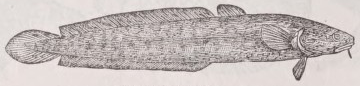
A fresh-water fish of the genus Lota, having on the nose two very small barbels, and a larger one on the chin.
Burckhardt
Encyclopedia Britannica
BURCKHARDT, John Ludwig (1784-1817), a celebrated Swiss traveller, was born at Kirchgarten, near Lausanne, November 24, 1784. After studying at Leipsic and Göttingen he visited England in the summer of 1806, carrying a letter of introduction from the celebrated Blumenbach to Sir Joseph Banks, who, with the other members of the African Association, accepted his offer to explore the interior of Africa. After studying in London and Cambridge, and inuring himself to all kinds of hardships and privations, he left England in April 1809 for Malta, whence he proceeded, in the following October, to Aleppo. In order that he might acquire Arabic thoroughly he disguised himself as a Mussulman, under the name of Sheik Ibrahim Ibn Abdallah; and, after two years passed in that part of Asia, he had so mastered the language as not to be distinguished from the natives, and had acquired such accurate knowledge of the contents of the Koran, and of the commentaries upon its religion and laws, that after a critical examination the most learned Mussulmans entertained no doubt of his being really what he professed to be, a learned doctor of their law. During his residence in Syria he visited Palmyra, Damascus, Lebanon, and thence repaired to Cairo with the intention of joining a caravan, and travelling to Fezzan, in the north of Africa. In 1812, whilst waiting for the departure of the caravan, he undertook a journey to the Nile, as far up as Mahass; and then, in the character of a poor Syrian merchant, he made a journey through the Nubian desert which Bruce had traversed, passing by Berber and Shendy to Suakin, on the Red Sea, whence he performed the pilgrimage to Mecca by way of Jiddah. After enduring privations and sufferings of the severest kind, he returned to Cairo in a state of great ...exhaustion; but in the spring of 1816 he travelled to mount Sinai, whence he returned to Cairo in June, and there made preparations for his intended journey to Fezzan, and exploration of the sources of the Niger. Several hindrances prevented his prosecuting this intention, and finally, in April 1817, when the long expected caravan prepared to depart, he was seized with an illness of which he died in October. He had from time to time carefully transmitted to England his journals and remarks, and a very copious series of letters, so that nothing which appeared to him to be interesting in the various journeys he made has been lost. He bequeathed his collection of 800 vols, of Oriental MSS. to the library of Cambridge university.
9th ed. Encyclopædia Britannica, vol. 4, p. 531
[460 words — estimated reading time: 3 minutes]
[460 words — estimated reading time: 3 minutes]
1. burd'n; written also burthen. [Latin fero, or porto.]
2. That which is borne or carried; a load. Hence,
4. A birth.
5. The verse repeated in a song, or the return of the theme at the end of each verse; the chorus; so called from the application of this word to the drone or base, and the pipe or string which plays it, in an instrument. A chord which is to be divided, to perform the intervals of music, when open and undivided, is also called the burden
6. In common language, that which is often repeated; a subject on which one dwells.
7. A fixed quantity of certain commodities; as a burden of gad steel, 120 pounds.
8. The contents of a ship; the quantity or number of tons, a vessel will carry; as a ship of a hundred tons burden
9. A club. [Not in use.]
1. burd'n. To load; to lay on a heavy load; to incumber with weight. Hence,
3. To surcharge; as, to burden the memory.
1. That which is borne or carried; a load.
3. The capacity of a vessel, or the weight of cargo that she will carry; as, a ship of a hundred tons burden.
4. The tops or heads of stream-work which lie over the stream of tin.
5. The proportion of ore and flux to fuel, in the charge of a blast furnace.
6. A fixed quantity of certain commodities; as, a burden of gad steel, 120 pounds.
7. A birth.
8. The verse repeated in a song, or the return of the theme at the end of each stanza; the chorus; refrain. Hence: That which is often repeated or which is dwelt upon; the main topic; as, the burden of a prayer.
10. A club.
3. To impose, as a load or burden; to lay or place as a burden (something heavy or objectionable).
Loaded with weight; incumbered; oppressed.
1. Grievous; heavy to be borne; oppressive.
2. Cumbersome; useless.
Burder
Encyclopedia Britannica
BURDER, George, one of the founders of the London Missionary Society, was born in London, June 5, 1752, and died there May 29, 1832. He was pastor of the Independent church at Lancaster from 1778 to 1783. Afterwards, he was for twenty years minister of the West Orchard chapel at Coventry. At the end of this period he removed to London, where for twenty-nine years he officiated at the Fetter Lane chapel. For many years he performed gratuitously the duties of secretary to the London Missionary Society, and edited, with much success, the Evangelical Magazine. He is chiefly remembered now as the author of the Village Sermons, which appeared at intervals from 1799 to 1812, and were at last completed in six volumes. They have had an extraordinarily wide circulation, and have passed through numerous editions. He edited many works,—among others the Pilgrim's Progress, Collings’s Weaver's Pocket-book, or Weaving Spiritualized, and Henry’s Bible with Improvements.
9th ed. Encyclopædia Britannica, vol. 4, p. 531
[162 words — estimated reading time: 1 minute]
[162 words — estimated reading time: 1 minute]
Burdett
Encyclopedia Britannica
BURDETT, Sir Francis (1770-1844), Baronet, was born on the 25th of January 1770. The rudiments of his education he received at Westminster school, whence he removed in due time to Oxford. He did not wait to graduate at that university, but in 1790 set out on a Continental tour, in the course of which he became strongly imbued with the revolutionary principles then dominant in France and other countries. On his return to England in 1793 he married the youngest daughter of Thomas Coutts, a London banker, with whom he received a large fortune. In 1796, through the influence of the duke of Newcastle, he was chosen M.P. for Boroughbridge, on which occasion he had as colleague John Scott, afterwards Lord Eldon. In 1797 he succeeded his grandfather in the baronetcy, his father and elder brother having predeceased him. At the outset of his political career he was a zealous supporter of ultra-liberal measures. In 1802, after a protracted contest, he was elected M.P. for Middlesex, in opposition to the former member, Mr Mainwaring. The election, however, was declared void, and in the subsequent canvass he was defeated. In 1806 he again stood for Middlesex and was again defeated, but when he stood for Westminster in the same year he was elected by a large majority. In March 1810 he wrote a letter to his constituents, denying the right of Government to commit for libel, as they had recently done. This letter was brought under the notice of the House, and the speaker issued a warrant for the committal of Sir Francis to the Tower. The baronet, however, disputed the right of the House, and had to be removed from his own residence by force. There was some collision in consequence between the military and the populace who were devoted to Sir Francis. At the prorogation of parliament he ...was released, and lost no time in prosecuting the Speaker and the Sergeant-at-arms, but without success. On the occasion of the Manchester riots in 1819 he wrote a letter to his constituents, for which he was tried for libel, found guilty, and condemned to three months’ imprisonment, and to pay a fine of £1000. In 1837 he ceased to represent Westminster, and when he was returned for North Wiltshire he joined the Conservative party, which he supported during the remainder of his political career. He died January 23, 1844.
9th ed. Encyclopædia Britannica, vol. 4, p. 532
[404 words — estimated reading time: 3 minutes]
[404 words — estimated reading time: 3 minutes]
1. A genus of plants, called Arctium. They are troublesome weeds.
2. The lesser burdock is a species of zanthium.
A genus of coarse biennial herbs (Lappa), bearing small burs which adhere tenaciously to clothes, or to the fur or wool of animals.
1. buro.
2. A chest of drawers, for keeping papers or clothes.
3. An ambassador's or secretary's office.
4. In Spanish, this word bureo is a court of justice for the trial of persons belonging to the king's household.
1. Originally, a desk or writing table with drawers for papers.
2. The place where such a bureau is used; an office where business requiring writing is transacted.
3. Hence: A department of public business requiring a force of clerks; the body of officials in a department who labor under the direction of a chief.
4. A chest of drawers for clothes, especially when made as an ornamental piece of furniture.
Coherence Roget’s Thesaurus §46
N. coherence, adherence, adhesion, adhesiveness, concretion, accretion, conglutination, agglutination, agglomeration, aggregation, consolidation, set, cementation, sticking, soldering, connection, dependence, tenacity, toughness, stickiness, inseparability, inseparableness, bur, remora, conglomerate, concrete
V. cohere, adhere, stick, cling, cleave, hold, take hold of, hold fast, close with, clasp, hug, grow together, hang together, twine round, stick like a leech, stick like wax, stick close, cling like ivy, cling like a bur, adhere like a remora, adhere like dejanira's shirt, glue, agglutinate, conglutinate, cement, lute, paste, gum, solder, weld, cake, consolidate, agglomerate
Adj. cohesive, adhesive, adhering, cohering, tenacious, tough, sticky, united, unseparated, unsessile, inseparable, inextricable, infrangible, compact
Sharpness Roget’s Thesaurus §253
N. sharpness, acuity, acumination, spinosity, point, spike, spine, spicule, spiculum, needle, hypodermic needle, tack, nail, pin, prick, prickle, spur, rowel, barb, spit, cusp, horn, antler, snag, tag thorn, bristle, adam's needle, bear grass, tine, yucca, nib, tooth, tusk, spoke, cog, ratchet, crag, crest, arete, cone peak, sugar loaf, pike, aiguille, spire, pyramid, steeple, beard, chevaux de frise, porcupine, hedgehog, brier, bramble, thistle, comb, awn, beggar's lice, bur, burr, catchweed, cleavers, clivers, goose, grass, hairif, hariff, flax comb, hackle, hatchel, heckle, wedge, knife edge, cutting edge, blade, edge tool, cutlery, knife, penknife, whittle, razor, razor blade, safety razor, straight razor, electric razor, scalpel, bistoury, lancet, plowshare, coulter, colter, hatchet, ax, pickax, mattock, pick, adze, gill, billhook, cleaver, cutter, scythe, sickle, scissors, shears, pruning shears, cutters, wire cutters, nail clipper, paper cutter, sword, bodkin, belduque, bowie knife, paring knife, bushwhacker, drawing knife, drawing shave, microtome, chisel, screwdriver blade, flint blade, guillotine, sharpener, hone, strop, grindstone, whetstone, novaculite, steel, emery
V. be sharp, taper to a point, bristle with, render sharp, sharpen, point, aculeate, whet, barb, spiculate, set, strop, grind, chip, cut
Adj. sharp, keen, acute, acicular, aciform, aculeated, acuminated, pointed, tapering, conical, pyramidal, mucronate, mucronated, spindle shaped, needle shaped, spiked, spiky, ensiform, peaked, salient, cusped, cuspidate, cuspidated, cornute, cornuted, cornicultate, prickly, spiny, spinous, spicular, thorny, bristling, muricated, pectinated, studded, thistly, briary, craggy, snaggy, digitated, two-edged, fusiform, dentiform, denticulated, toothed, odontoid, starlike, stellated, stelliform, sagittate, sagittiform, arrowheaded, arrowy, barbed, spurred, acinaciform, apiculate, apiculated, aristate, awned, awny, bearded, calamiform, cone-shaped, coniform, crestate, echinate, gladiate, lanceolate, lanciform, awl, awl-shaped, lance-shaped, awl-shaped, scimitar-shaped, sword-shaped, setarious, spinuliferous, subulate, tetrahedral, xiphoid, cutting, sharp edged, knife edged, sharp as a razor, keen as a razor, sharp as a needle, sharp as a tack, sharpened, set
Roughness Roget’s Thesaurus §256
N. roughness, tooth, grain, texture, ripple, asperity, rugosity, salebrosity|, corrugation, nodosity, arborescence, pilosity, brush, hair, beard, shag, mane, whisker, moustache, imperial, tress, lock, curl, ringlet, fimbriae, pili, cilia, villi, lovelock, beaucatcher, curl paper, goatee, papillote, scalp lock, plumage, plumosity, plume, panache, crest, feather, tuft, fringe, toupee, wool, velvet, plush, nap, pile, floss, fur, down, byssus, moss, bur, fluff, knot (convolution) 248
V. be rough, go against the grain, render-rough, roughen, ruffle, crisp, crumple, corrugate, set on edge, stroke the wrong way, rumple
Adj. rough, uneven, scabrous, scaly, knotted, rugged, rugose, rugous, knurly, asperous, crisp, salebrous|, gnarled, unpolished, unsmooth, roughhewn, craggy, cragged, crankling, scraggy, prickly, arborescent, leafy, well-wooded, feathery, plumose, plumigerous, laciniate, laciniform, laciniose, pappose, pileous, pilose, trichogenous, trichoid, tufted, fimbriated, hairy, ciliated, filamentous, hirsute, crinose, crinite, bushy, hispid, villous, pappous, bearded, pilous, shaggy, shagged, fringed, befringed, setous|, setose, setaceous, "like quills upon the fretful porcupine", rough as a nutmeg grater, rough as a bear, downy, velvety, flocculent, woolly, lanate, lanated, lanuginous, lanuginose, tomentose, fluffy
Adv. against the grain
Phr. cabello luengo y corto el seso
Engraving Roget’s Thesaurus §558
N. engraving, chalcography, line engraving, mezzotint engraving, stipple engraving, chalk engraving, dry point, bur, etching, aquatinta, chiseling, plate engraving, copperplate engraving, steel engraving, wood engraving, xylography, lignography, glyptography, cerography, lithography, chromolithography, photolithography, zincography, glyphography, xylograph, lignograph, glyptograph, cerograph, lithograph, chromolithograph, photolithograph, zincograph, glyphograph, holograph, impression, print, engraving, plate, steelplate, copperplate, etching, mezzotint, aquatint, lithotint, cut, woodcut, stereotype, graphotype, autotype, heliotype, graver, burin, etching point, style, plate, stone, wood block, negative, die, punch, stamp, printing, plate printing, copperplate printing, anastatic printing, color printing, lithographic printing, type printing, three-color process, illustration, illumination, half tone, photogravure, vignette, initial letter, cul de lampe, tailpiece, lapidary, lapidarian
Adj. insculptured, engraved, lapidary
Phr. sculpsit, imprimit
King James Bible KJV Bible
Berean Standard Bible BSB Bible
981 KJV and 858 BSB verses contain “bur” — showing the first 20. Show all 1,120 verses (searchable)
In the six hundredth year of Noah’s life, in the second month, the seventeenth day of the month, the same day were all the fountains of the great deep broken up, and the windows of heaven were opened.
In the six hundredth year of Noah’s life, on the seventeenth day of the second month, all the fountains of the great deep burst forth, and the floodgates of the heavens were opened.
And thou shalt go to thy fathers in peace; thou shalt be buried in a good old age.
You, however, will go to your fathers in peace and be buried at a ripe old age.
And he said, Take now thy son, thine only son Isaac, whom thou lovest, and get thee into the land of Moriah; and offer him there for a burnt offering upon one of the mountains which I will tell thee of.
“Take your son,” God said, “your only son Isaac, whom you love, and go to the land of Moriah. Offer him there as a burnt offering on one of the mountains, which I will show you.”
And Abraham took the wood of the burnt offering, and laid it upon Isaac his son; and he took the fire in his hand, and a knife; and they went both of them together.
Abraham took the wood for the burnt offering and placed it on his son Isaac. He himself carried the fire and the sacrificial knife, and the two of them walked on together.
And Isaac spake unto Abraham his father, and said, My father: and he said, Here am I, my son. And he said, Behold the fire and the wood: but where is the lamb for a burnt offering?
Then Isaac said to his father Abraham, “My father!” “Here I am, my son,” he replied. “The fire and the wood are here,” said Isaac, “but where is the lamb for the burnt offering?”
And Abraham said, My son, God will provide himself a lamb for a burnt offering: so they went both of them together.
Abraham answered, “God Himself will provide the lamb for the burnt offering, my son.” And the two walked on together.
And Abraham lifted up his eyes, and looked, and behold behind him a ram caught in a thicket by his horns: and Abraham went and took the ram, and offered him up for a burnt offering in the stead of his son.
Then Abraham looked up and saw behind him a ram in a thicket, caught by its horns. So he went and took the ram and offered it as a burnt offering in place of his son.
Hear us, my lord: thou art a mighty prince among us: in the choice of our sepulchres bury thy dead; none of us shall withhold from thee his sepulchre, but that thou mayest bury thy dead.
That he may give me the cave of Machpelah, which he hath, which is in the end of his field; for as much money as it is worth he shall give it me for a possession of a buryingplace amongst you.
to sell me the cave of Machpelah that belongs to him; it is at the end of his field. Let him sell it to me in your presence for full price, so that I may have a burial site.”