A familiar word for mother, used by young children.
Word of the Day: Catachrestical
1. Mother; -- word of tenderness and familiarity.
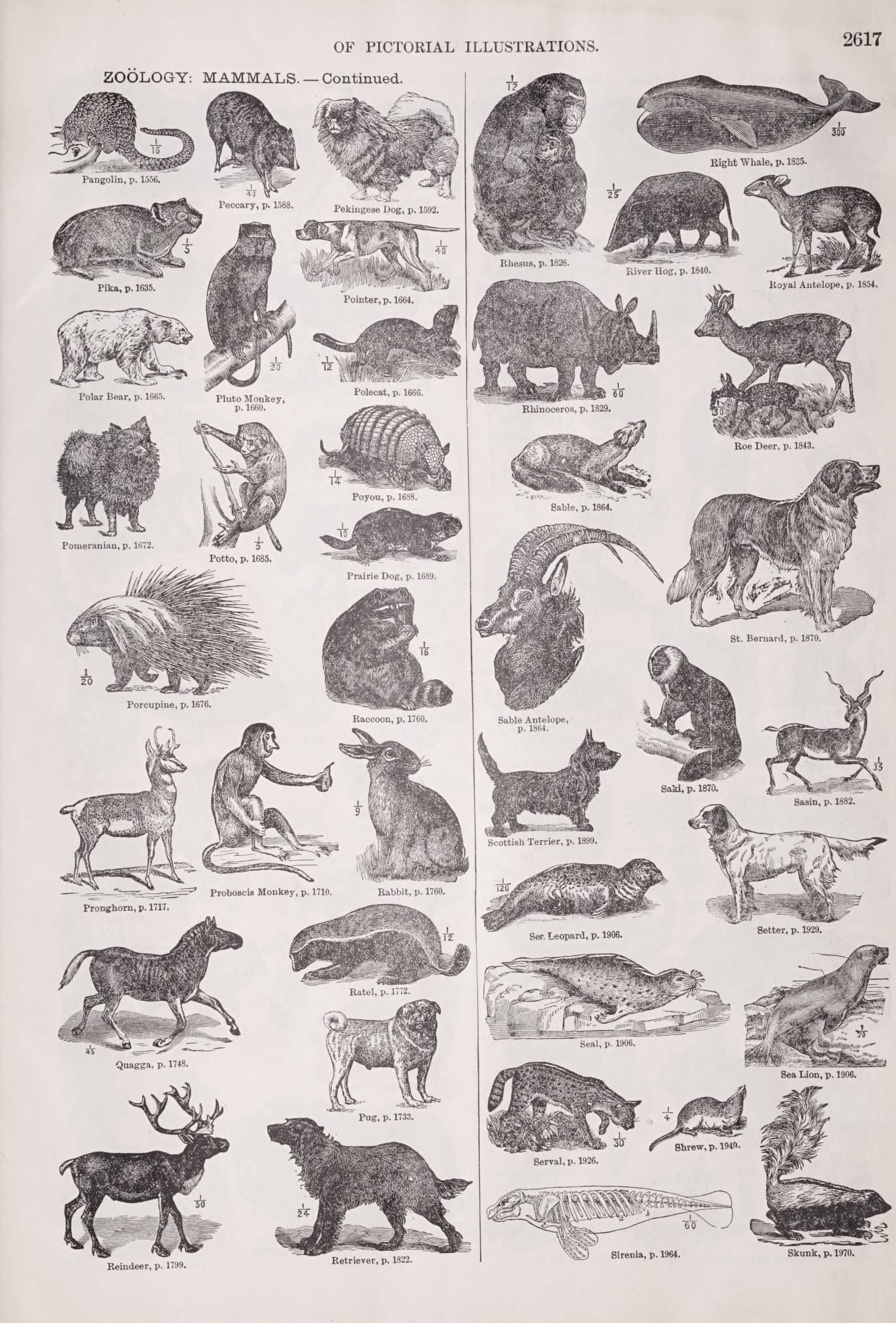
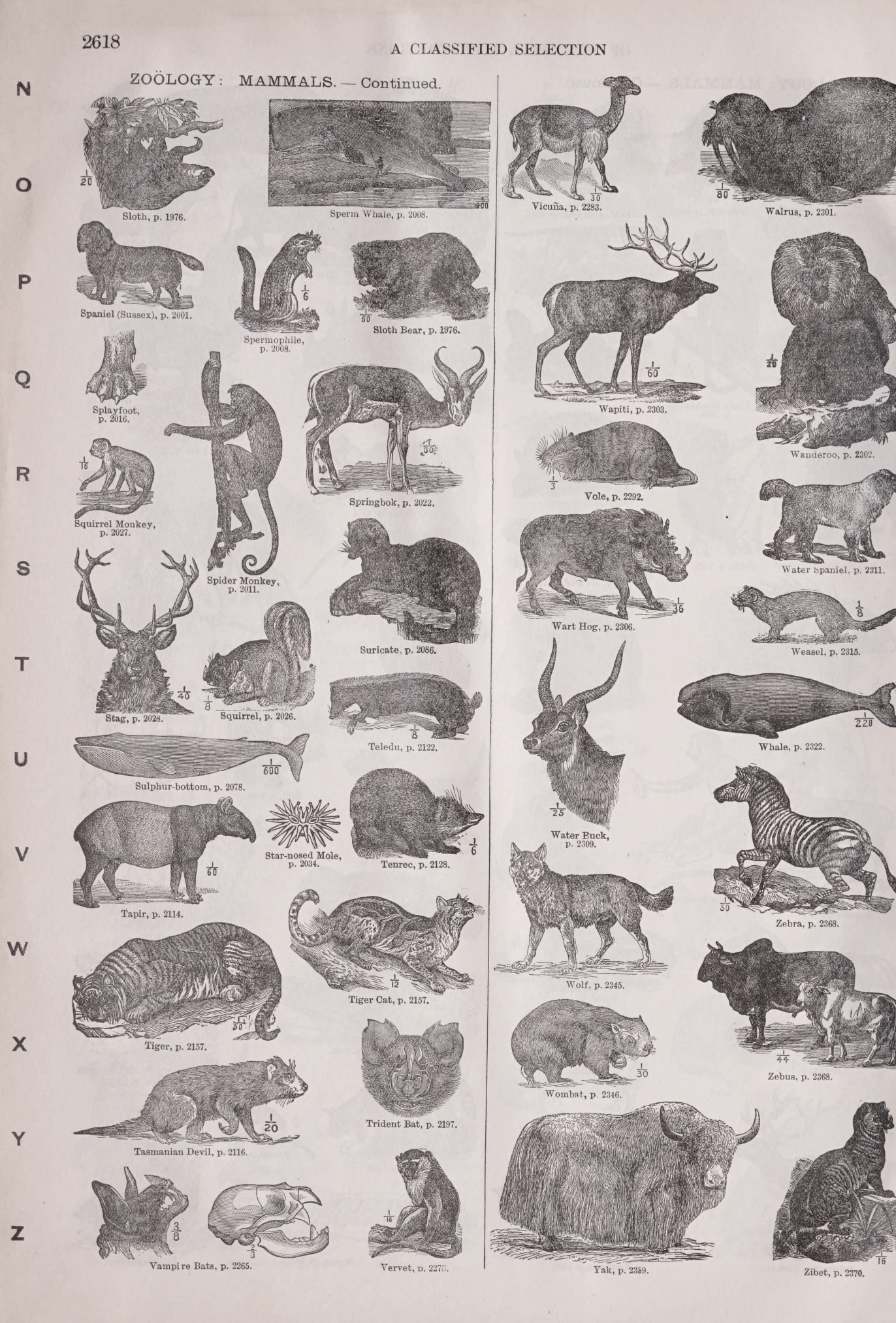
The highest class of Vertebrata. The young are nourished for a time by milk, or an analogous fluid, secreted by the mammary glands of the mother.
Mammalia
Encyclopedia Britannica
MAMMALIA
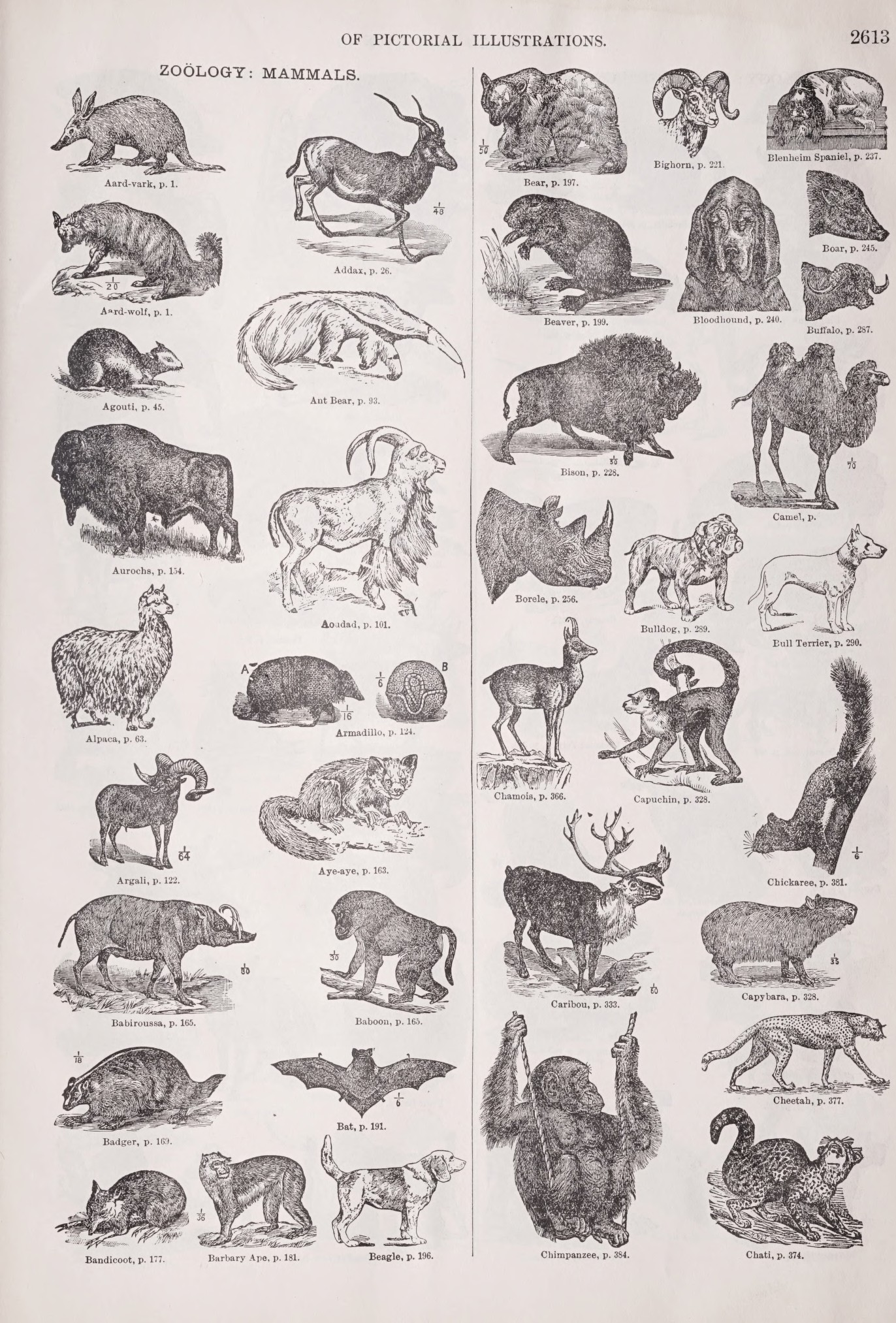
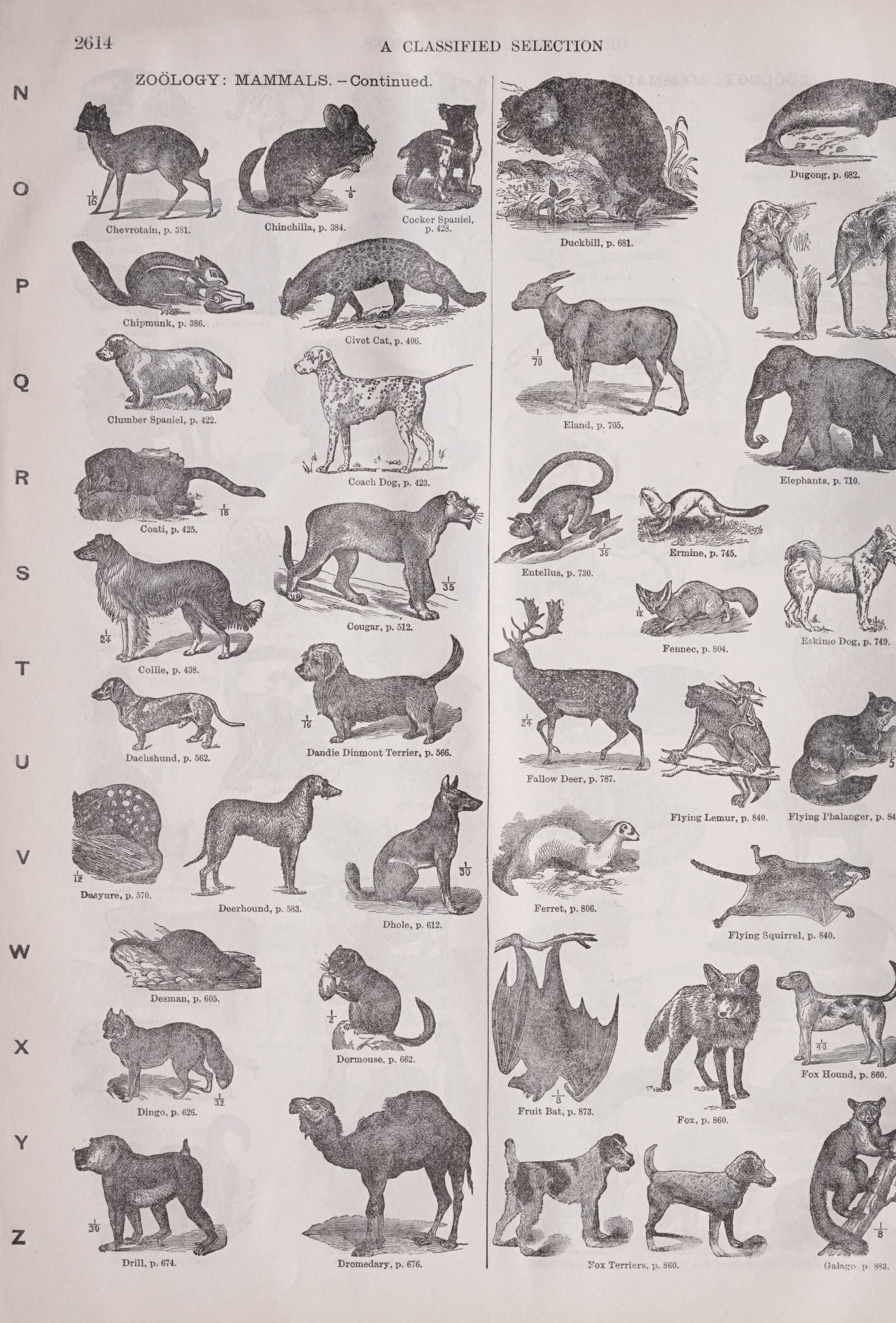
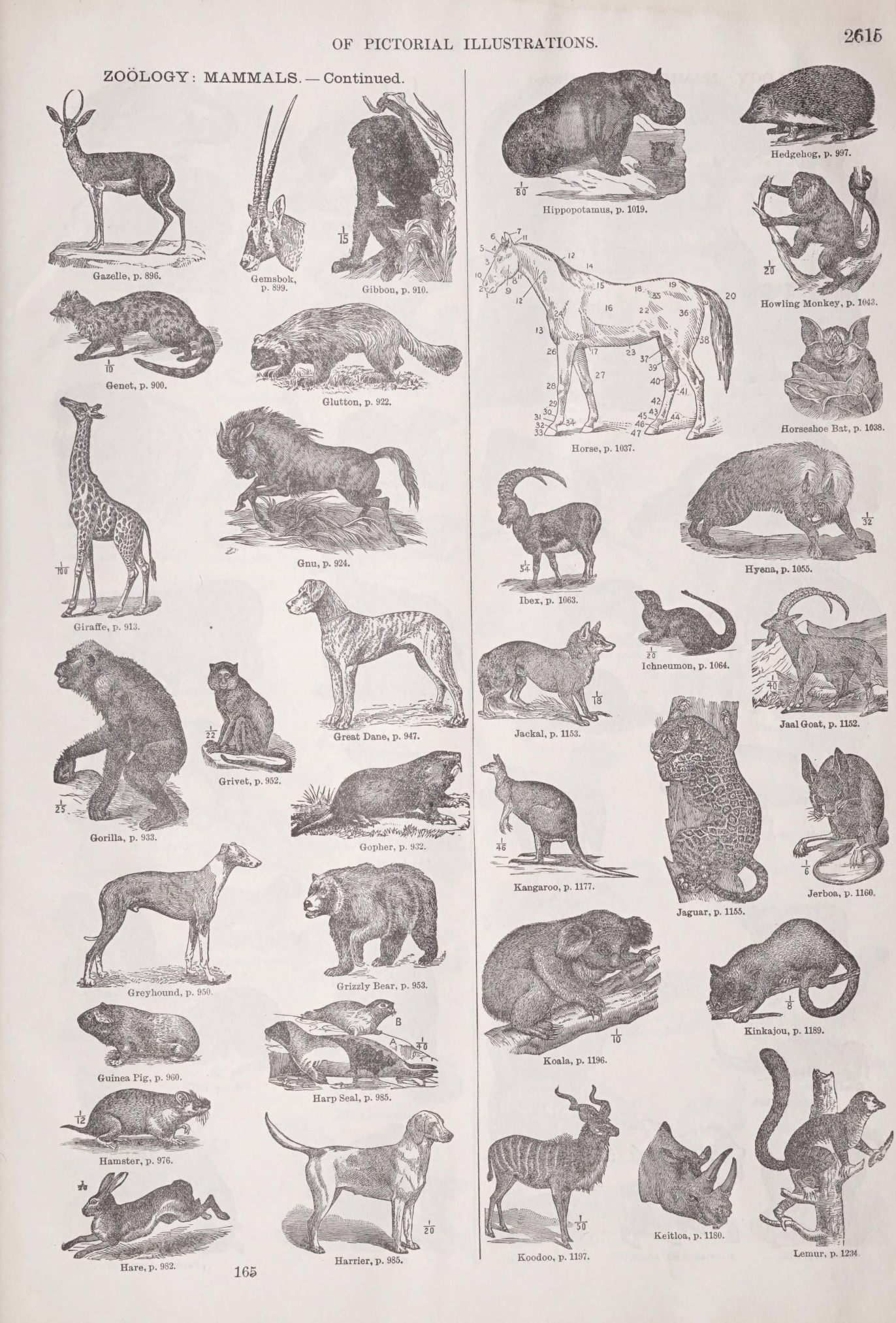
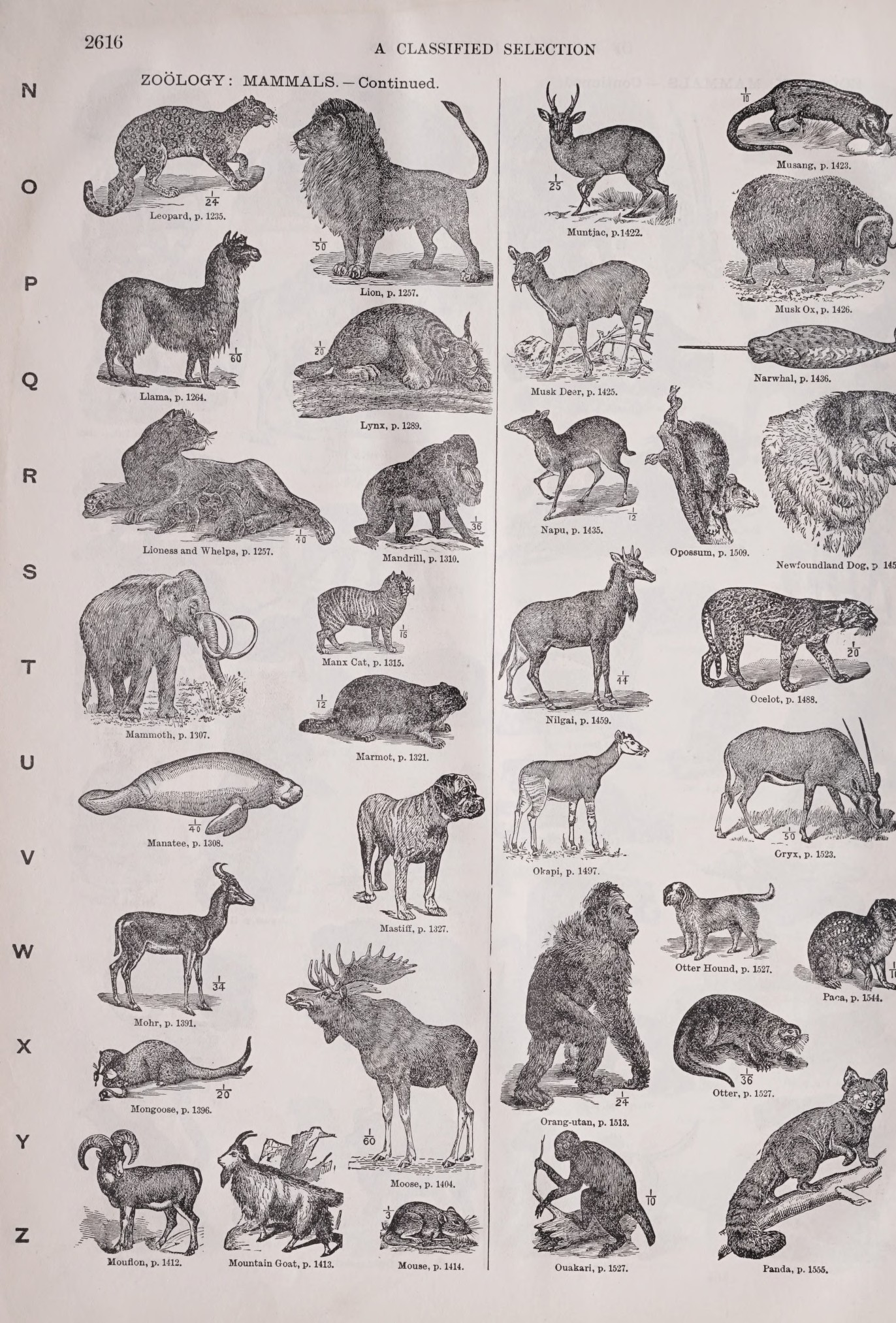
MAMMALIA (French, Mammifères ; German, Säuge- thiere) is the name invented by Linnaeus (from the Latin, mamma), and now commonly used by zoologists, for one of the classes of vertebrated animals, which, though the best known and undoubtedly the most important group of the animal kingdom, has never received any generally accepted vernacular designation in our language. The unity of structure of the animals composing this class, and their definite demarcation from other vertebrates, were not recognized until comparatively modern times, and hence no word was thought of to designate what zoologists now term a mammal. The nearest equivalents in common use are “beast” and “quadruped,’’ both of which, however, cover a different ground, as they are often used to include the larger four-footed reptiles, and to exclude certain undoubted mammals, as Man, Bats, and Whales.
The limits of the class as now understood by zoologists are perfectly well defined, and, although certain forms still existing on the earth (though not those mentioned above as excluded by the popular idea) are of exceedingly aberrant structure, exhibiting several well-marked characters which connect them with the lower vertebrated groups, common consent retains them in the class with which the great proportion of their characters ally them, and hitherto no traces of any species showing still more divergent or transitional characters have been discovered. There is thus a great interval, not bridged over by any known forms, recent or extinct, between mammals and other vertebrates....
In the gradual order of evolution of living beings, mammals taken altogether are certainly the highest in organization, as they were probably the last to appear on the earth’s surface, though this must be said with some reservation, pending further knowledge of the early history of the class of birds. But, as in speaking of all other large and greatly differentiated groups, this expression must not be understood in too limited a sense. The tendency to gradual perfection for their particular station in life, which all groups manifest, leads to various lines of specialization, or divergence from the common or general type, which may or may not take the direction of elevation. A too complex and sensitive condition of organization may in some circumstances of life be disadvantageous, and modification may then take place in a retrograde direction. In mammals, as in other classes, there are low forms as well as high forms, but by any tests that can be applied, especially those based on the state of development of the central nervous system, it will be seen that the average exceeds the average of any other class, that many species of this class far excel those of any other in perfection of structure, and that it contains one form which is unquestionably the culminating point yet arrived at amongst organized beings.
With regard to the time of the first appearance of mammals upon the earth, the geological record is provokingly imperfect. At the commencement of the Tertiary period they were abundant, and already modified into most of the leading types at present existing. It was at one time thought that they first came into being at this date, but the discovery of fragments of numerous small species has revealed the existence of some forms of the class at various periods throughout almost the whole of the age of the deposition of the Secondary rocks. This subject will be reverted to later on.
It hardly need be said that mammals are vertebrated animals, and possess all the characteristics common to the members of that division of the animal kingdom. They are separated from the Ichthyopsida (fishes and amphibia) and agree with the Sauropsida (reptiles and birds) in the possession during their development of an amnion and allantois, and in never having external branchiae or gills. They differ from reptiles and resemble birds in being warm-blooded, and having a heart with four cavities and a complete double circulation. They differ from both birds and reptiles in the red corpuscles of the blood being nucleated and, with very few exceptions, circular in outline; in the lungs being freely suspended in a thoracic cavity, separated from the abdomen by a complete muscular partition, the diaphragm, which is the principal agent in inflating the lungs in respiration; in having but one aortic arch, which curves over the left bronchus; in the skin being more or less clothed with hair, and never with feathers; in the greater perfection of the commissural system of the cerebral hemispheres, which has either a complete corpus callosum, or an incomplete one associated with a very larger anterior commissure; in having no syrinx or inferior vocal organ, but a complete larynx at the upper end of the trachea; in having a mandible of which each ramus (except in very early developmental conditions) consists of a single bone on each side, articulating to the squamosal, without the intervention of a quadrate bone; in having a pair of laterally placed occipital condyles instead of one median one; and in the very obvious character of the female being provided with mammary glands, by the secretion of which the young (produced alive and not by means of externally hatched eggs) are nourished for some time after birth.
In common with all vertebrated animals, mammals have never more than two pairs of limbs. In the great majority of the class both are well-developed and functional, and adapted for terrestrial progression, as the larger number of mammals live ordinarily on the surface of the earth. They are, however, by no means limited to this situation. Some species spend the greater part of their lives beneath the surface, their fore limbs being specially modified for burrowing; others are habitually arboreal, their limbs being fitted for climbing or hanging to boughs of trees; some are as aerial as birds, the fore limbs being developed into wings of a special character; others are as aquatic as fishes, the limbs assuming the form of fins or paddles. In many of the latter the hinder extremities are either completely suppressed, or present only in a rudimentary state. In no known mammal are the fore limbs absent.
The hinder extremity of the axis of the body is usually prolonged into a tail, which may be a mere pendent appendage, or modified to perform various functions, as grasping boughs in climbing, or even gathering food, in the case of the prehensile-tailed Monkeys and Opossums, swimming in the Cetacea, and acting as a flap to drive away troublesome insects from the skin in the Ungulata.
GENERAL ANATOMICAL CHARACTERS OF THE MAMMALIA.
Tegumentary Structures.
The external surface of the greater number of members of the class is thickly clothed with a peculiarly modified form of epidermis, commonly called hair. This consists of hard, elongated, slender, cylindrical or tapering, filiform, unbranched masses of epidermic material, growing from a short papilla sunk at the bottom of a follicle in the derm or true skin. Such hairs upon different parts of the same animal, or upon different animals, assume various forms, and are of various sizes and degrees of rigidity,—as seen in the delicate soft velvety fur of the Mole, the stiff bristles of the Pig, and the spines of the Hedgehog and Porcupine, all modifications of the same structures. These differences arise mainly from the different arrangement of the constituent elements into which the epithelial calls are modified. Each hair is composed usually of a cellular pithy internal portion, containing much air, and a denser or more horny cortical part. In some animals, as Deer, the substance of the hair is almost entirely composed of the medullary or cellular substance, and it is consequently very easily broken; in others the horny part prevails almost exclusively, as in the bristles of the Wild Boar. In the Three-toed Sloth (Bradypus) the hairs have a central horny axis and a pithy exterior. Though generally nearly smooth, or but slightly scaly, the surface of some hairs is strongly imbricated, notably so in some Bats, while in the Two-toed Sloth (Choloepus) they are longitudinally grooved or fluted. Though usually more or less cylindrical or circular in section, they are often elliptical or flattened, as in the curly-haired races of men, the terminal portion of the hair of Moles and Shrews, and conspicuously in the spines of the Rodents Xerus and Platacanthomys. Hair having a property of mutual cohesion or “felting,” which depends upon a roughened scaly surface and a tendency to curl, as in domestic Sheep (in which animals this property has been especially cultivated by selective breeding), is called “wool.”
In a large number of mammals hairs of one kind only are scattered pretty evenly over the surface, but in many there are two kinds, one longer, stiffer, and alone appearing on the surface, and the other shorter, finer, and softer, constituting the under fur, analogous to the down of birds. In most cases hairs of a different character from those of the general surface grow in special regions, forming ridges or tufts on the median dorsal or ventral surface or elsewhere. The tail is very often completed in this way by variously disposed elongated hairs. The margins of the eyelids are almost always furnished with a special row of stiffish hairs, called cilix or eyelashes, and in most mammals specially modified hairs, constituting the vibrissx or whiskers, endowed, through the abundant nerve supply of their basal papillae, with special tactile powers, grow from the lips and cheeks. In some mammals the hairy covering is partial and limited to particular regions; in others, as the Hippopotamus and the Sirenia, though scattered over the whole surface, it is extremely short and scanty; but in none is it reduced to so great an extent as in the Cetacea, in which it is limited to a few small bristles confined to the neighbourhood of the lips and nostrils, and often only present in the young or even foetal condition.
Some kinds of hairs, as those of the mane and tail of the Horse, appear to persist throughout the life-time of the animal; but more generally, as in the case of the body hair of. the same animal, they are shed and renewed periodically, generally annually. Many mammals have a longer hairy coat in winter, which is shed as summer comes on; and some few, which inhabit countries covered in winter with snow, as the Arctic Fox, Variable Hare, and Ermine, undergo a complete change of colour in the two seasons, being white in winter, and grey or brown in summer. The several species of Cape Mole (Chrysochloris), the Desmans or Water Moles {Myogale∖ and Potamogale velox are remarkable as being the only mammals whose hair reflects those iridescent tints so common in the feathers of tropical birds.
The principal and most obvious purpose of the hairy covering is to protect the skin against external influences, especially cold and damp. Its function in the hairless Cetacea is supplied by the specially modified and thickened layer of adipose tissue beneath the skin called “blubber.”
True scales, or flat imbricated plates of horny material, covering the greater part of the body, so frequently occurring in reptiles, are found in one family only of mammals, the Manidx or Pangolins; but these are also associated with hairs growing from the intervals between the scales or on the parts of the skin not covered by them. Similarly imbricated epidermic productions form the covering of the under surface of the tail of the flying Rodents of the genus Anomalurus ; and flat scutes, with the edges in apposition, and not overlaid, clothe both surfaces of the tail of the Beaver, Rats, and others of the same order, and also of some Insectivores and Marsupials. The Armadillos alone have an ossified exoskeleton, composed of plates of true bony tissue, developed in the derm or corium, and covered withscutes of horny epidermis. Other epidermic appendages are the horns of Ruminants and Rhinoceroses,—the former being elongated, tapering, hollow caps of hardened epidermis of fibrillated structure, fitting on and growing from conical projections of the frontal bone, and always arranged in pairs, while the latter are of similar structure, but without any internal bony support, and situated in the median line. Callosities, or bare patches covered with hardened and thickened epidermis, are found over the ischial tuberosities of many apes, the sternum of camels, on the inner side of the limbs of the Equidx, the grasping under surface of the tail of prehensile-tailed monkeys, &c. The greater part of the skin of both species of one-horned Asiatic Rhinoceros is immensely thickened and stiffened by increase of the tissue both of the derm and epiderm, constituting the well known jointed “armour-plated” hide of those animals.
With very few exceptions, the terminal extremities of the digits of both limbs are more or less protected or armed by epidermic plates or sheaths, constituting the various forms of nails, claws, or hoofs. These are wanting in the Cetacea alone. A perforated spur, with a special secreting gland in connexion with it, is found attached to the hind leg of the males of the two species of Monotremata, the Ornithorhynchus and Echidna.
Besides the universally distributed sebaceous glands connected with the pilose system, most mammals have special glands situated in modified portions of the integument, often involuted to form a shallow recess or a deep sac with a narrow opening, situated in various parts of the surface of the body, and which secrete odorous substances, by the aid of which individuals appear to recognize one another, and which probably afford the principal means by which wild animals are able to become aware of the presence of other members of the species, even at great distances. Although the commencement of the modifications of portions of the external covering for the formation of special secretions may be at present difficult to understand, the principle of natural selection will readily explain how such organs can become fixed and gradually increase in development in any species, especially as there would probably be a corresponding modification and increased sensibility of the olfactory organs. Such individuals as by the intensity and peculiarity of their scent had greater power of attracting the opposite sex would certainly be those most likely to leave descendants to inherit and in their turn propagate the modification.
To this group of structures belong the suborbital gland or “crumen” of Antelopes and Deer, the frontal gland of the Muntjak and of Bats of the genus Phyllorhina, the submental gland of the Chevrotains and of Taphozous and some other Bats, the post-auditory follicle of the Chamois, the temporal gland of the Elephant, the lateral glands of the Musk-Shrew, the lumbar gland of the Peccary, the inguinal glands of Antelopes, the preputial glands of the Musk Deer and Beaver (both so well known for the use made of their powerfully odorous secretion in medicine and perfumery) and also of the Swine and Hare, the anal glands of Carnivora, the perineal gland of the Civet (also of commercial value), the caudal glands of the Fox and Goat, the gland on the humeral membrane of Bats of the genus Saccopteryx, the post-digital gland of the Rhinoceros, the inter-digital glands of the Sheep and many Ruminants, and numerous others. In some of these cases the glands are peculiar to, or more largely developed in, the male; in others they are found equally developed in both sexes.
Dental System.
The dental system of mammals may be considered rather more in detail than space permits for some other portions of their structure, both on account of the important part it plays in the economy of the animals of this class, and of its interest to zoologists as an aid in classification and identification of species. Owing to the imperishable nature of their tissues, teeth are preserved for an indefinite time, and in the case of extinct species often offer the only indications available from which to derive an idea of the characters, affinities, and habits of the animal to which they have belonged. Hence even their smallest modifications have received great attention from comparative anatomists, and they have formed the subject of many special monographs.
Teeth are present in nearly all mammals, and are applied to various purposes. They are, however, mainly subservient to the function of alimentation, being used either in procuring food by seizing and killing living prey or gathering and biting off portions of vegetable material, and more indirectly in tearing or cutting through the hard protective coverings of food substances, as the husks and shells of nuts, or in pounding, crushing, or otherwise mechanically dividing the solid materials before swallowing, so as to prepare them for digestion in the stomach. Certain teeth are also, in many animals most efficient weapons of offence and defence, and for this purpose alone, quite irrespective of subserviency to the digestive process, are they developed in the male sex of many herbivorous animals, in the females of which they are absent or rudimentary.
Teeth belong essentially to the tegumentary or dermal system of organs, and, as is well seen in the lower vertebrates, pass by almost insensible gradations into the hardened spines and scutes formed upon the integument covering the outer surface of the body, but in mammals they are more specialized in structure and limited in locality.. In this class they are developed only in the gums or fibro-mucous membrane covering the alveolar borders of the upper and lower jaw or the premaxillary and maxillary bones and the mandible. In the process of development, for the purpose of giving them that support which is needful for the performance of their functions, they almost always become implanted in the bone,—the osseous tissue growing up and moulding itself around the lengthening root of the tooth, so that ultimately they become apparently parts of the skeleton. In no mammal, however, does ankylosis or bony union between the tooth and jaw normally take place, as in many fishes and reptiles,—a vascular layer of connective tissue, the alveolo-dental membrane, always intervening.
The presence of two or more roots, frequently met with in mammals, implanted into corresponding distinct sockets of the jaw, is peculiar to animals of this class.
The greater number of mammalian teeth when fully formed are not simple and homogeneous in structure, but are composed of several distinct tissues.
1. The pulp, a soft substance, consisting of a very delicate gelatinous connective tissue, in which numerous cells are imbedded, and abundantly supplied with blood-vessels and nerves, constitutes the central axis of all the basal part of the tooth, and affords the means by which the vitality of the whole is preserved. The nerves which pass into the pulp and endow the tooth with sensibility are branches of the fifth pair of cranial nerves. The pulp occupies a larger relative space, and performs a more important purpose in the young growing tooth than afterwards, as by the calcification and conversion of its outer layers the principal hard constituent of the tooth, the dentine, is formed. In teeth which have ceased to grow the pulp occupies a comparatively small space, which in the dried tooth is called the pulp cavity. This communicates with the external surface of the tooth by a small aperture at the apex of the root, through which the branches of blood-vessels and nerves, by which thg tooth receives its nutrition and sensitiveness, pass in to be distributed in the pulp. In growing teeth the pulp cavity is widely open below, while in advanced age it often becomes obliterated, and the pulp itself entirely converted into bone-like material.
2. The dentine or ivory forms the principal constituent of the greater number of teeth. When developed in its most characteristic form, it is a very hard but elastic substance, white, with a yellowish tinge, and slightly translucent. It consists of an organic matrix, something like but not identical with that of bone, richly impregnated with calcareous salts (chiefly phosphate of lime), these constituting in a fresh human tooth 72 per cent, of its weight. When subjected to microscopical examination it is seen to be everywhere permeated by nearly parallel branching tubes which run, in a slightly curving or wavy manner, in a general direction from the centre towards the free surface of the tooth. These tubes communicate by open mouths with the pulp cavity, and terminate usually near the periphery of the dentine, by closed ends or loops, though in Marsupials and certain other mammals they penetrate into the enamel. They are occupied in the living tooth by soft gelatinous fibrils connected with the cells of the pulp. A variety of dentine, permeated by canals containing blood-vessels, met with commonly in fishes and in some few mammals, as the Megatherium, is called vasodentine. Other modifications of this tissue occasionally met with are called osteo-dentine and secondary dentine,— the latter being a dentine of irregular structure which often fills up the pulp cavity of old animals.
3. The enamel constitutes a thin investing layer, complete or partial, of the outer or...
9th ed. Encyclopædia Britannica, vol. 15, p. 347
[122,379 words — estimated reading time: 11.7 hours]
[122,379 words — estimated reading time: 11.7 hours]
Pertaining to the mammals.
Containing mammalian remains; -- said of certain strata.
Of or pertaining to mammalogy.
One who treats of mammiferous animals.
One versed in mammalogy.
The science or doctrine of mammiferous animals. [ See Mammifer .]
Pertaining to the breasts or paps; as the mammary arteries and veins.
Paternity Roget’s Thesaurus §166
N. paternity, parentage, consanguinity, parent, father, sire, dad, papa, paterfamilias, abba, genitor, progenitor, procreator, ancestor, grandsire, grandfather, great- grandfather, fathership, fatherhood, mabap, house, stem, trunk, tree, stock, stirps, pedigree, lineage, line, family, tribe, sept, race, clan, genealogy, descent, extraction, birth, ancestry, forefathers, forbears, patriarchs, motherhood, maternity, mother, dam, mamma, materfamilias, grandmother
Phr. avi numerantur avorum, "happy he with such a mother", hombre bueno no le busquen abolengo, philosophia stemma non inspicit
No Bible verses found for "mamma".