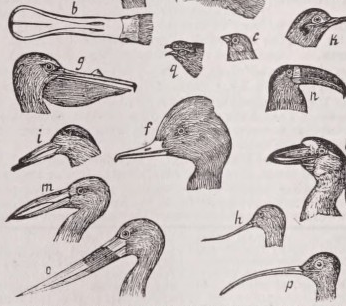
BILL means generally a statement in writing, and is derived from the Latin bulla. The word is used in a great many special applications....
Bill, in Parliament, is a form of statute submitted to either House, which, after passing both Houses and receiving the royal assent, becomes an Act. The modern system of legislating by means of bill and statute appears to have been introduced in the reign of Henry VI., superseding the older mode of proceeding by petitions from the Commons, assented to by the king, and afterwards enrolled by the judges. A bill consists of a preamble, reciting the necessity for legislation, and clauses which contain the enactments. The procedure with regard to bills is much the same in both Houses. Leave having been obtained, the bill is presented by the member in charge of it, and the first reading is usually allowed without opposition. At the second reading the principle of the bill is placed in issue; the usual form of amendment is that the bill be read a second time that day three or six months, the direct rejection of bills being incompatible with the courtesy of the House. The next stage is the committee, in which the different clauses are gone through in detail by the House sitting under the presidency of a chairman of committees. Two principles must be observed in reference to amendments :—(1), The amendment must not be irrelevant to the subject-matter of the clause; nor (2), must it propose to leave out all the words of the clause after the initial “That” in order that new words may be introduced. The bill having been fully considered the committee rises, the speaker resumes the chair, and the chairman of committee reports the bill to the House, which is up to this time supposed to be ignorant of the proceedings of the committee. A bill may be referred to a select committee (the course followed with private bills) or recommitted as often as the House desires. On the third reading the judgment of the House is expressed on the entire bill as it leaves the hands of the committee; and after the third reading the motion that the bill do pass is usually allowed without opposition. The bill is then communicated to the other House, where it passes through the same stages. Should the one House make amendments on a bill sent up by the other, the latter considers the amendments, and if they are not agreed to the bill is laid aside, or postponed for three or six months, or a message is sent with reasons for disagreement, or a conference between the Houses is requested. Having passed through both Houses the bill receives the royal assent, and therewith the “complement and perfection of a law.” Bills are divided into public and private; the latter includes every bill for “the particular interest or benefit of any person or persons,” whether individuals or corporations. They are brought in upon the solicitation of parties interested, and the payment of fees is an indispensable element of their progress. Occasionally there is some difficulty in assigning a bill to its proper class, e.g., in bills relating to the metropolis, which, on account of the magnitude of the interests involved, are sometimes treated as public bills, although having, according to the definition, a purely private character. Private bills are subject to special regulations, and in case of opposition the proceedings before the select committees assume the form of an ordinary litigation. The chairman of committees in the Lords, and the chairman of ways and means in the Commons, are required to watch unopposed bills. Certain bills can only originate in one or other of the two Houses, e.g., money bills in the House of Commons, and bills for the restitution of honours and blood in the House of Lords; and any bill concerning the privileges of either House should originate in the House to which it relates.
A Bill of Exchange is definedas “anuncondiiional written order from A to Β, directing B to pay to C a sum certain of money therein named.” A is called the drawer, B the drawee, and C the payee. When the drawer has undertaken to pay the bill he is called the acceptor. Contrary to the general rule in the law of England the benefit of a contract arising on a bill of exchange is assignable, and consideration will be presumed unless the contrary appear. Bills of exchange are believed to have been in use in the 14th century, but the first recorded decision of an English court regarding them occurs in the reign of James I. The courts long regarded them with jealousy as an exception to the common law, and restricted their use to the class of merchants, but their obvious utility overcame the scruples of the judges. The law on this subject has been evolved in a long series of judicial decisions. The following are a few of its leading principles :—Abill to be transferable must contain a direction to the order of the payee or to bearer. If payable to order it must be transferred by endorsement; but if to bearer, it may be transferred by mere delivery. A blank endorsement (e.g., the mere signature of the endorser) makes the bill payable to bearer; a special endorsement directs payment to a person named, or his order. Every endorser of a bill is in effect a new drawer, and is liable to every succeeding holder in default of acceptance or payment. Just as the original drawer contracts to pay the payee, if the acceptor do not, so the endorser contracts that, if the drawer shall not pay the bill, he, on receiving due notice of the bill being dishonoured, will pay the holder what the drawee ought to have paid, An endorsement is held to admit “the signature and capacity of every prior party,” and an endorser, in default of acceptance or payment, has a right of action against all those whose names were on the bill when it was endorsed to him. When a bill is transferred by delivery without endorsement it is generally regarded as sold, and the instrument is taken with all its risks. There are, however, some exceptions to this rule, as in the case of payment by bill for a precedent debt, <fcc., and the transferor will be held responsible if he knows at the time of sale that the bills are good for nothing. W τ hen a bill is payable to bearer it circulates like money, and the bona fide possessor is considered the true owner. Bills should be presented as soon as possible to the drawer or his agent for acceptance, which must be in writing on the bill. They should be presented for payment at the proper time, and the laws of commercial countries usually allow three days of grace after the day on which the bill becomes due. If the bill is not duly presented by the holder, the antecedent parties are relieved from liability. If the bill is not accepted, or after acceptance not paid, the holder must give notice of dishonour to the antecedent parties within a reasonable time, otherwise their liability will be discharged. When a foreign bill is dishonoured the custom of merchants requires that it should be protested. The protest is a solemn declaration by a notary written under a copy of the bill that payment or acceptance has been demanded and refused. Bills and notes, by tbe usage of trade, carry interest from the date of maturity. If in an action on a bill it turn out that the bill has been lost, the action may still be maintained provided that an indemnity is given against the claims of any other persons upon the instrument. The Act 18 and 19 Vict. c. 6 7, gives a summary process to the plaintiff in an action on a bill of exchange or promissory note commenced within six months after the same has become due or payable. Unless the defendant has obtained leave to appear and has appeared to the action, the plaintiff may sign final judgment for the amount with costs. The defendant, if he wishes to defend the action, must pay the money into court or show by affidavit such facts as may be sufficient to induce the judge to give him leave.
Foreign Bills (as distinguished from Inland Bills) are bills drawn or payable abroad. By 19 and 20 λ ict. c. 97, § 7, bills or notes drawn on one part and payable in any other part of the British Isles are inland bills. Foreign bills are usually drawn in sets or parts, each containing a condition to be payable only so long as the others continue unpaid.
When a bill is accepted by the drawee without consideration, and merely in order that the drawer may be able to raise money upon it, it is called an accommodation bill. Both parties are liable to the holder; but, as between themselves, the drawer is the principal and the acceptor a sort of surety. When acceptance has been refused and the bill protested, a stranger may accept it “supra protest, in honour of the drawer or endorser.” The effect of this is to render the acceptor liable if the drawer does not pay, and the party for whose honour it was made, and parties antecedent to him, become liable to the acceptor. Payment for the honour of one of' the parties may likewise be made by a mere stranger when a bill has been protested for nonpayment, who thereupon acquires a claim against such person and all those to whom he could have resorted.
The negotiability of promissory notes and bank cheques is for the most part regulated by the same principles as bills of exchange. A promissory note is a “promise in writing to pay a specified sum at a time therein limited, to a person therein named or his order or to bearer.” Cheques which are inland bills of exchange drawn on a banker have become subject to certain peculiar usages. See Exchange.
A Bill of Lading is a document signed by the master of a general ship and delivered to the owners of goods conveyed therein. It is usually made out in several parts or copies, of which the shipper retains one and sends one or more to the consignee, while the master keeps one for his own guidance. The following is the usual form :— Shipped in good order and well conditioned by [A. B., merchant] in and upon the good ship called [The Good Intent], whereof [C , . Zλ] is master for this present voyage, and now riding at anchor in the [Part of Southampton], and bound to [Cadiz in Spain, twenty cases of hardware and fifty bales of cotton goods], being marked and numbered as in the margin, and are to be delivered in the like good order and well conditioned at the aforesaid port [of Cadiz], the act of God, the Queen’s enemies, fire, and all and every other dangers and accidents of the seas, rivers, and navigations of whatever kind or nature whatsoever excepted, unto [E. F., merchant], or to his assigns, he or they paying freight for the said goods [ ] per case, and [
per bale freight, with primage and average accustomed. In witness whereof, &c.
Every bill of lading requires a sixpenny stamp. By the mercantile law a bill of lading is a negotiable instrument, and the property in the goods may be transferred by endorsement. By 18 and 19 Vict. c. Ill, every consigner of goods named on a bill of lading, and every endorser to whom the property of the goods mentioned therein passes by reason of the consignment or endorsement, shall have transferred to and invested in him all rights of suit, and be subject to the same liabilities in respect of the goods as if the contract contained in the bill of lading had been made with himself.
A Bill of Sale is an assignment of personal property. It is frequently made by way of security, the property remaining in possession of the vendor. For the protection of creditors from secret or fraudulent sale, the Bills of Sale Act, 1854, and the Amendment Act, 29 and 30 Vict. c. 96, were passed. By these Acts a bill of sale of personal chattels made at any time by a defendant in an action will be void as against a plaintiff on whose behalf a writ of execution in such action shall be sued out and delivered, so far as regards any personal chattels in defendant’s possession at or after the time of executing such writ, unless such bill of sale shall be duly registered for public inspection in the Court of Queen’s Bench within twenty-one days of its date. The registration must be renewed once in every five years during the subsistence of the security.
Bill in Chancery. A suit in the Court of Chancery was generally commenced by a bill, addressed to the lord chancellor, containing a statement of the plaintiff’s case, and praying for relief. By the Chancery Amendment Act, 1862, it is enacted that “every bill shall contain as concisely as may be, a narrative of the material facts, matters, and circumstances on which the plaintiff relies; such narrative being divided into paragraphs numbered consecutively, and each paragraph containing as nearly as may be a separate or distinct statement or allegation; and shall pray specifically for the relief which the plaintiff may conceive himself entitled to, and also for general relief.” By the Judicature Act, 1873, a new form of procedure is established for all the superior courts. See Action, (e. r.)
BILLETING. The law as to billeting soldiers is regulated by the provisions of the Annual Mutiny Act (38 Vict. c. 7, §§ 63-67). Constables of parishes and places, police officers, high constables, and other chief officers and magistrates may billet officers and soldiers on actual service, with their horses and baggage, in victualling house, inn, hotel, livery stable, ale-house, or the "house of any seller of wine by retail to be drunk in such house, or the houses of persons selling brandy, spirits, strong waters, cider, or metheglin by retail; but no officer or soldier shall be billeted in any private houses, or in any canteen under the authority of the War Department, nor on persons keeping taverns only being vintners of the city of London, nor on distillers, nor on shopkeepers whose principal dealing is more in other goods than in brandy and strong waters, so as such distillers and shopkeepers do not permit tippling in such houses. If the victualler has not sufficient accommodation in his own house he must find it in the immediate neighbourhood. The following sums are allowed as compensation :—For hot meal, to be supplied each day to soldiers on the march, 10d., with 2⅜d. for a bed; for other soldiers, entitled to bed, candles, use of fire and cooking utensils, 4d. per diem for each soldier; for ten pounds of oats, twelve of hay, and eight of straw, Is. 9d. per diem. Military officers must not act as justices in billeting.