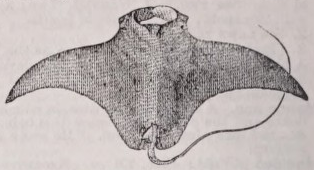
DEVIL is the name which has been given in the New Testament and in Christian theology to a supreme evil personality supposed to rule over a kingdom of evil spirits, of whom he is the chief, and to be the restless and unfailing adversary of God and man. The Hebrew term denoting “adversary,” or Satan, is also applied to this supreme evil spirit, or prince of the kingdom of evil. There can be no question that such an evil spirit is frequently spoken of in the New Testament. He is designated by various names in addition to these mentioned, such as “the Tempter,” “Beelzebub,” “the Prince of Devils,” “the Strong One,” “the Wicked One,” “the Enemy,” or “the Hostile One.” Throughout the Gospels these terms are used interchangeably, and in all cases seem to denote the same active power or personality of evil outside man and exercising influence over him. It may be a question how far Jesus Christ himself acknowledges the existence of such an evil power, but there can be no question that such a being was recognized in the current belief of the Jews in His time....
But it is also certain that this belief amongst the Jews was one of'gradual growth, and is not to be tracedin the Old Testament in any such definite form as we meet with it in the New. The expression “Satan” is indeed found in the Old Testament, but only five times, if so frequently, as a proper name,—thrice in the book of Job (L 6, 12; ii. 1), once in the opening of the 21st chap, of 1 Chronicles (although here the allusion to a distinct personality may be held doubtful), and in Zechariah (iii. 1). In all other places where the word occurs, “Satan” is used in its common sense of “adversary,” a sense in which it also occurs in the Gospels, in the well-known passage (Matt, xvi. 23) where our Lord addresses St Peter, “Get thee behind me, Satan,” or “adversary.” The books of Chronicles and Zechariah are indisputably amongst the latest writings of the Old Testament; and, although the date of Job is unsettled, it may also be presumed to belong to a late period in the history of revelation. In the earlier prophetic literature of the Hebrews there is no recognition of any spirit of evil at war with Jehovah. All power and dominion are, on the contrary, clearly ascribed to Jehovah himself, who is supreme i∏ heaven, on earth, and under the earth. The connection of Satan with the serpent in the garden of Eden in Genesis (iii. 1-7) is an inference of later dogmatic opinion, arising probably out of the use of the expression “Old Serpent” applied to Satan in Rev. (xx. 2), but receives no countenance from the scriptural narrative itself, which speaks of the serpent purely as an animal, and pronounces a curse against him with reference to his animal nature solely. The idea of a distinct personality of evil, therefore, is not to be found in the earlier Hebrew Scriptures, and is, in fact, inconsistent with the cardinal ∙principle of the older Hebrew theology that Jehovah was the sole source of all power, the author both of good and evil, who hardened Pharaoh’s heart (Exod. x. 27), and sent a lying spirit among the prophets of Ahab (I Kings xxii. 20-3). Even in the later Scriptures in which “Satan” is spoken of as a distinct person, there is little or no analogy betwixt what is said of such a person in these Scriptures and what is said of him in the New Testament. The “Satan” of the book of Job is described as coming among the “sons of God” to present himself before the Lord. He is the image of malice, restlessness, and envy— the willing messenger of evil to Job; but he is not represented as the impersonation of evil, or as a spiritual assailant of the patriarch. He is really a delegated agent in the hands of Jehovah to execute His will, and the evils with which he assails Job are outward evils. The picture is quite different from that of the “Archangel ruined,” or the devil, or Satan, of later theology.
The question then arises as to the special source of the conception of the devil as a fallen and evil spirit. The explanation commonly given of this conception by our modern critical schools is that it sprang out of the intercourse of the Jews with the Persians during their period of exile. In the Persian, or Iranian, mythology it is well known that a personal power of evil was conspicuously recognized. The Iranian religion divided the world betwixt two opposing self-existent deities, the one good and the other evil, but both alike having a share in creation and in man. Ormuzd, or Ahuramazda, was holy and true, and to be honoured and worshipped. But Ahriman, or Anra-mainyu, the evil-minded, the spirit of darkness, was no less powerful, and claimed an equal share of man’s homage. These were the good and the evil in thought, word, and deed. Man has to choose betwixt the two. He cannot serve both. With this dualistic system the Jews came in contact during their captivity at Babylon, and are supposed to have retained permanent traces of it in their subsequent theology. The conception of the devil, and of a lower kingdom of demons, or devils, is the evident illustration of this. The case is put in this way by a Christian writer of moderation and knowledge :—“That the Hebrew prophets had reiterated their belief in one God with the most profound conviction is not to be questioned; but as little can it be doubted that, as a people, the Jews had exhibited little impulse towards monotheism, and that from this time (the period of their captivity) we discern a readiness to adopt the Zoroastrian demonology” (Cox’s Aryan Mythology, ii. 356). The conception of Satan in the later canonical books of Chronicles and Zechariah is even attributed to this source. “Thus far Satan had appeared, as in the book of Job, among the ministers of God; but in later books we have a closer approximation to the Iranian creed. In Zechariah and the first book of Chronicles, Satan assumes the character of Ahriman, and appears as the author of evil. Still later he becomes the prince of devils, the source of wicked thoughts, the enemy of the Word and Son of God” (Ibid., p. 351).
The process by which the Jewish mind worked out this conception and the whole scheme of demonology found in the New Testament was of course gradual. The Book of Wisdom, a product of Alexandriau-Jewish thought in the 2d century before Christ, which speaks of the devil having “through envy introduced evil into the world” (ii. 24), is supposed to represent a stage in this development; and the apocryphal books of Enoch and Esdras (IV.), the former of which is pre-Christian, indicate further .stages. Another stage is supposed to be marked by the recognition of a “devil,” or evil spirit, under the name of Asmodeus, in the book of Tobit (1Õ0 b.c.) There is certainly a remarkable analogy betwixt parts of the eschatological teaching of the book of Enoch and other apocryphal books and that σf the gospels. But the development of Jewish theology as a whole, in the ages immediately antecedent to Christianity, is still involved in considerable obscurity; and it is difficult to say how much of the. eschatology and demonology of the New Testament is to be regarded as original, and how much as derived or inherited from prior modes of thought.
It must also be conceded that, even should we accept the modern critical theory of the rise of the New Testament conception of the devil and of demons, there is much in it that must be pronounced very different from the Zoroastrian or Iranian conception. The devil of the gospels is in some respects very unlike the Ahriman of Zoroastrianism. He is in no sense a twin-creator of man. He has no original share in him, and no right to his homage. In the Persian system the warfare of good or evil is a warfare of balanced forces. But the evil personality of the New Testament, powerful as he is, and always the enemy of the divine, is yet a subordinated and inferior being. He is the tempter of the Son of God and the enemy of man. He has power on earth, and even a certain power over the Son of man; and yet the Son can restrain and bid him get behind Him. The subordinated forces of evil—the demons—are all subject to Christ. They hear His word and obey it. In short, the devil of the New Testament is, in comparison with the source of evil recognized by Zoroastrianism, a limited power. He is a subordinate although insurrectionary spirit, working by spiritual means upon the heart of man, and in no sense a native power having an original or creative hold of him. This sets the evangelical conception on a higher level than the Persian, and proves that the Jewish mind, supposing that it did borrow certain impulses from the Iranian dualism with which it came in contact in the period of exile, yet wrought out the conception in the depth of its own religious and moral consciousness within the sphere of revealed truth which was its great educational medium.
The idea of an evil personality was therefore so far a native growth of the Jewish mind, working upon hints contained, although not developed, in the earlier Hebrew Scriptures. It is evident from various passages, both of the Pentateuch (Lev. xvii. 17; Deut, xxxii. 17) and of the prophetic Scriptures and the Psalms (Isa. xiii. 21, xxxiv. 14; Jer. xv. 36; Ps. cvi. 37), that the Hebrews were cognizant of evil beings supposed to dwell in darkness and waste places. The names applied to those beings in the passages referred to are various, sometimes seirim—lit. goats (Lev. xvii. 7; Isa. xiii. 21), and sometimes shedim (Deut, xxxii. 17), probably a name for demigods, both phrases being translated “devils” in our authorized version of the Pentateuch. This translation suggests later associations; but such expressions plainly denote a belief in evil beings, the survival, probably, in the Hebrew consciousness of fragments of an older native faith which deified the powers of evil as well as of good. Some have traced a similar survival in the name Azazel, translated in our version scape-goat (Levit, xvi. 8, 10, 26), and which has been supposed to represent an evil being haunting the desert, to which was devoted the goat sent away on the great day of atonement. This opinion is disputed by others on grounds both philological and theological. But it may be almost certainly assumed that, with all the jealous monotheism of the Jews, there was an undergrowth of darker conceptions, pointing to evil existences opposed to the divine, and that to some extent the later idea of the devil sprang out of this natural growth in the Hebrew mind of an evil side to nature and to life. This process of growth may have been greatly aided by contact with the Persian dualism, and especially the idea of a kingdom and hierarchy of evil powers seems to have been indebted to this source. But it was also largely original, and at the end, as at the beginning, the Jewish and Christian conceptions of the devil and his angels were very distinct from those of the Persian faith. They belong to a higher level of thought, and are the product of a more advanced stage of moral and spiritual feeling.
The idea of the devil so clearly expressed in the New Testament passed as a dominant factor into the early Christian theology, acquiring for many centuries an always deeper hold on the popular religious imagination. In the writings of the fathers of the 2d and 3d centuries the devil plays an important part. The whole of the Roman imperial system, and all that opposed the progress of the gospel, was identified with his kingdom. Satan was the “prince of this world,” he was the rival and caricature of the divine. “Satan,” said Tertullian, “is God’s ape;” and the saying passed into a proverb. He fell by pride and arrogance and envy of the divine creation (Iren., Adv. Haer., iv. 40). He was, according to Cyprian (De Unitate Ecclst, the author of all heresies and delusions; he held man by reason of his sin in rightful possession, and man could only be rescued from his power by the ransom of Christ’s blood. This extraordinary idea of a payment or satisfaction to the devil being made by Christ as the price of man’s salvation is found both in Irenaeus (Adv. Haer., v. 1. 1.) and in Origen, and may be said to have held its sway in the church for nearly a thousand years. And yet Origen is credited with the opinion that, bad as the devil was, he was not altogether beyond hope of pardon. In this as in other respects the early Alexandrian school showed a milder and broader type of thought than the prevailing theology of the church. Occasionally in later times the milder opinion was expressed, as by Gregory of Nyssa in the 4th century; but gradually it vanished, and the devil was drawn by the theological pencil in darker and more terrible colours. Augustine greatly helped to strengthen and confirm the darker view, and to give in this as in other things a gloomier tinge to religious thought. During the Middle Ages the belief in the devil was absorbing—saints conceived themselves and others to be in constant conflict with him. It is hardly possible for us now, as M. Reville says in his short treatise on the subject, “to imagine to what a degree this belief controlled men’s whole lives. It was the one fixed idea with every one, particularly from the 13th to the 15th century—the period at which we may consider this superstition to have reached its climax.” The superstition showed certainly but slight signs of yielding in the 15th, or even in the 16th or 17th centuries. Luther lived in a constant consciousness of contact and opposition with the evil one. At his study, in bed, or in his cell, the devil was incessantly interfering with his work or rest. As he was going to begin his studies he heard a noise which he immediately interpreted as proceeding from his enemy. “As I found he was about to begin again, I gathered together my books and got into bed. Another time in the night I heard him above my cell walking in the cloister; but as I knew it was the devil I paid no attention to him and went to sleep.” Again he says: “Early this morning, when I awoke the fiend came and began disputing with me. ‘ Thou art a great sinner,’ said he. I replied, ‘ Canst thou not tell me something new, Satan? ’”
This realism of belief in an evil power near to man, and constantly assailing him, continued more or less all through the 17th century, and was especially strong, as Mr Buckle has shown in his well-known volumes, in Scotland. He has somewhat overcharged his picture; but he presents at the same time indisputable facts which leave no doubt that the clergy and people alike imagined that “the devil was always and literally at hand—that he was haunting them, speaking to them, and tempting them. Go where they would he was there.” With the rise of a rationalistic temper throughout Europe, in the 18th century, this belief in the pervading influence of diabolic agency began to disappear. The sense of the supernatural decayed in all directions, and especially the old belief in the arbitrary control exercised by an evil power over human destiny. And while the religious impulse has gained greatly since then, and shown renewed vigour both in an evangelical and catholic direction, it cannot be said that the earlier faith in the operations of a personal devil has acquired reascendency. It may be still the prevailing opinion of Christendom that there is an evil power working in the world opposed to the divine; but whether this power is personal, or how far it touches the human will, or again, whether there is a subterranean kingdom of demons with a prince of demons or devil at their head, and how far such a kingdom has arty relation to human destiny, are all questions that must be held to be very unsettled, or maintained with very doubtful confidence in any section of the Christian church. It is our business simply to note such a change in the attitude of Christian belief, and not to express any opinion as to its advantage or otherwise. It is too much to speak with Μ. Reville of Satan as a “fallen majesty;” but the idea of the devil certainly no longer bulks in Christian thought as it once did, nor is his reign the recognized influence that it once was over human life and experience. (j. τ.)