1. The act of rolling, or state of being rolled; as the roll of a ball.
2. The thing rolling.
3. A mass made round; something like a ball or cylinder; as a roll of fat; a roll of wool.
4. A roller; a cylinder of wood, iron or stone; as a roll to break clods.
5. A quantity of cloth wound into a cylindrical form; as a roll of woolen or satin; a roll of lace.
6. A cylindrical twist of tobacco.
7. An official writing; a list; a register; a catalogue; as a muster-roll; a court roll
8. The beating of a drum with strokes so rapid as scarcely to be distinguished by the ear.
9. Rolls of court, of parliament, or of any public body, are the parchments on which are engrossed, by the proper officer, the acts and proceedings of that body, and which being kept in rolls, constitute the records of such public body.
10. In antiquity, a volume; a book consisting of leaf, bark, paper, skin or other material on which the ancients wrote, and which being kept rolled or folded, was called in Latin volume, from volvo, to roll Hence.
11. A chronicle; history; annals.
12. Nor names more noble graced the rolls of fame.
13. Part; office; that is, round of duty, like turn. obsolete
1. To move by turning on the surface, or with the successive application of all parts of the surface to a plane; as, a ball or a wheel rolls on the earth; a body rolls on an inclined plane.
2. To move, turn or run on an axis; as a wheel. [In this sense, revolve is more generally used.
3. To run on wheels.
4. And to the rolling chair is bound.
5. To revolve; to perform a periodical revolution; as the rolling year. Ages roll away.
1. To move by turning on the surface, or with a circular motion in which all parts of the surface are successively applied to a plane; as, to roll a barrel or puncheon; to roll a stone or ball. Sisyphus was condemned to roll a stone to the top of a hill, which, when he had done so, rolled down again, and thus his punishment was eternal.
2. To revolve; to turn on its axis; as, to roll a wheel or a planet.
3. To move in a circular direction.
4. To dress, to troll the tongue and roll the eye.
5. To wrap round on itself; to form into a circular or cylindrical body; as, to roll a piece of cloth; to roll a sheet of paper; to roll parchment; to roll tobacco.
6. To enwrap; to bind or involve in a bandage or the like.
7. To form by rolling into round masses.
8. To drive or impel any body with a circular motion, or to drive forward with violence or in a stream. The ocean rolls its billows to the shore. A river rolls its water to the ocean.
9. To spread with a roller or rolling pin; as, to roll paste.
1. To cause to revolve by turning over and over; to move by turning on an axis; to impel forward by causing to turn over and over on a supporting surface; as, to roll a wheel, a ball, or a barrel.
2. To wrap round on itself; to form into a spherical or cylindrical body by causing to turn over and over; as, to roll a sheet of paper; to roll parchment; to roll clay or putty into a ball.
3. To bind or involve by winding, as in a bandage; to inwrap; -- often with up; as, to roll up a parcel.
4. To drive or impel forward with an easy motion, as of rolling; as, a river rolls its waters to the ocean.
5. To utter copiously, esp. with sounding words; to utter with a deep sound; -- often with forth, or out; as, to roll forth some one's praises; to roll out sentences.
6. To press or level with a roller; to spread or form with a roll, roller, or rollers; as, to roll a field; to roll paste; to roll steel rails, etc.
7. To move, or cause to be moved, upon, or by means of, rollers or small wheels.
8. To beat with rapid, continuous strokes, as a drum; to sound a roll upon.
9. To apply (one line or surface) to another without slipping; to bring all the parts of (one line or surface) into successive contact with another, in suck manner that at every instant the parts that have been in contact are equal.
1. The act of rolling, or state of being rolled; as, the roll of a ball; the roll of waves.
2. That which rolls; a roller.
3. A heavy cylinder used to break clods.
4. One of a set of revolving cylinders, or rollers, between which metal is pressed, formed, or smoothed, as in a rolling mill; as, to pass rails through the rolls.
5. That which is rolled up; as, a roll of fat, of wool, paper, cloth, etc.
6. A document written on a piece of parchment, paper, or other materials which may be rolled up; a scroll.
7. Hence, an official or public document; a register; a record; also, a catalogue; a list.
8. A quantity of cloth wound into a cylindrical form; as, a roll of carpeting; a roll of ribbon.
9. A cylindrical twist of tobacco.
10. A kind of shortened raised biscuit or bread, often rolled or doubled upon itself.
11. The oscillating movement of a vessel from side to side, in sea way, as distinguished from the alternate rise and fall of bow and stern called pitching.
1. To move, as a curved object may, along a surface by rotation without sliding; to revolve upon an axis; to turn over and over; as, a ball or wheel rolls on the earth; a body rolls on an inclined plane.
2. To move on wheels; as, the carriage rolls along the street.
3. To be wound or formed into a cylinder or ball; as, the cloth rolls unevenly; the snow rolls well.
4. To fall or tumble; -- with over; as, a stream rolls over a precipice.
5. To perform a periodical revolution; to move onward as with a revolution; as, the rolling year; ages roll away.
6. To turn; to move circularly.
7. To move, as waves or billows, with alternate swell and depression.
8. To incline first to one side, then to the other; to rock; as, there is a great difference in ships about rolling; in a general semse, to be tossed about.
9. To turn over, or from side to side, while lying down; to wallow; as, a horse rolls.
10. To spread under a roller or rolling-pin; as, the paste rolls well.
11. To beat a drum with strokes so rapid that they can scarcely be distinguished by the ear.
12. To make a loud or heavy rumbling noise; as, the thunder rolls.
1. That which rolls; that which turns on its own axis; particularly, a cylinder of wood, stone or metal, used in husbandry and the arts. Rollers are of various kinds and used for various purposes.
3. One of series of long, heavy waves which roll in upon a coast, sometimes in calm weather.
4. A long, belt-formed towel, to be suspended on a rolling cylinder; -- called also roller towel.
5. A cylinder coated with a composition made principally of glue and molassess, with which forms of type are inked previously to taking an impression from them.
6. A long cylinder on which something is rolled up; as, the roller of a man.
7. A small wheel, as of a caster, a roller skate, etc.
8. ANy insect whose larva rolls up leaves; a leaf roller. see Tortrix.
9. Any one of numerous species of Old World picarian birds of the family Coraciadae. The name alludes to their habit of suddenly turning over or "tumbling" in flight.
10. Any species of small ground snakes of the family Tortricidae.
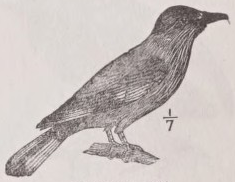
ROLLER a very beautiful bird so called from its way of occasionally rolling or turning over in its flight, somewhat after the fashion of a Tumbler-Pigeon. It is the Coracias garruius of ornithology, and is widely though not very numerously spread over Europe and Western Asia in summer, breeding so far to the northward as the middle of Sweden, but retiring to winter in Africa. It occurs almost every year in some part or other of the British Islands, from Cornwall to the Shetlands, while it has visited Ireland several times, and is even recorded from St. Kilda. But it is only as a wanderer that it comes hither, since there is no evidence of its having ever attempted to breed in Great Britain; and indeed its conspicuous appearance—for it is nearly as big as a Daw and very brightly coloured—would forbid its being ever allowed to escape the gun of the always ready murderers of stray birds. Except the back, scapulars, and tertials, which are bright reddish-brown, the plumage of both sexes is almost entirely blue—of various shades, from pale turquoise to dark ultra-marine—tinted in parts with green. The bird seems to be purely insectivorous. The genus Coracias, for a long while placed by systematists among the Crows, has really no affinity whatever to them, and is now properly considered to belong to the heterogeneous group of Birds in this work called Pixariae (Ornithology, vol. xviii. p. 41), in which it forms the type of the Family Coraciidae·, and its alliance to the Bee-eaters, Meropidae, and King-fishers (vol. xiv. p. 81), Alcedinidae, is very evident. Some eight other species of the genus have been recognized, one of which, C. leuco-cephalus or C. abyssinus, is said to have occurred in Scotland. India has two species, C. indiens and C. affînis, of which ...thousands upon thousands are annually destroyed to supply the demand for gaudy feathers to bedizen ladies’ dresses. One species, C. temmincki, seems to be peculiar to Celebes and the neighbouring islands, but otherwise the rest are natives of the Ethiopian or Indian Regions. Allied to Coracias is the genus Eurystomus with some half dozen species, of similar distribution, but one of them, E. jιacificus, has a wider range, for it inhabits Australia and reaches Tasmania. Madagascar has four or five very remarkable forms which have often been considered to belong to the Family Coraciidae ; and, according to Professor A. Milne-Edwards, no doubt should exist on that point. Yet if any may be entertained it is in regard to one of them, Lepto-somus discolor, which on account of its zygodactylous feet some authorities place among the Cuculidae, while others have considered it the type of a distinct Family Lepto-somatidae. The genera Brachypteraxias and Atelornis present fewer structural differences from the Rollers, and perhaps may be rightly placed with them; but the species of the latter have long tarsi, and are believed to be of terrestrial habit, which Rollers generally certainly are not. These very curious and in some respects very interesting forms, which are peculiar to Madagascar, are admirably described and illustrated by a series of twenty plates in the great work of MM. Grandidier and A. Milne-Edwards on that island (Oiseaux, pp. 223-250), while the whole Family Coraciidae is the subject of a monograph by Mr Dresser, as a companion volume to his monograph on the ∖∣ PPCiiuπPρ I A "N" I
9th ed. Encyclopædia Britannica, vol. 20, p. 627 [581 words — estimated reading time: 4 minutes]
ROLLIN Charles (1661-1741), was born at Paris on 30th January 1661. He was the son of a tradesman, but distinguished himself at school, and at the age of twenty-two was made a master in the Collége du Plessis. He was successively promoted to various other posts of the same kind. In 1694 he was rector of the university of Paris. He held that post for two years instead of one, and was then appointed principal of the Collége de Beauvais. He was of Jansenist principles, and in the later years of his life was for this cause deprived of his appointments and disqualified for the rectorship, to which in 1719 he had been re-elected. It is said that the same reason prevented his election to the French Academy, though he was a member of the Academy of Inscriptions. He was concerned in the affair of the deacon Paris, and shortly before his death (14th December 1741) protested publicly against the acceptance of the bull Unigenitus....
Rollin’s literary work dates chiefly from the later years of his life, when he had been forbidden to teach. His once famous Atvcient History (Paris, 1730-38) and the less generally read Roman History which followed it were avowed compilations, and compilations which were not only far from critical but even somewhat inaccurate. But they have hàd the merit not merely of instructing but of interesting generation after generation almost to the present day. A more original and really important work, though less generally known out of France, was his Traité des Etudes (Paris, 1726-31). It contains a summary of what was even then a reformed and innovating system of education, including a more frequent and extensive use of the vulgar tongue and discarding the mediaeval traditions that had lingered in France. It had very considerable influence. Rollin’s style is good and his personal character was irreproachable.
9th ed. Encyclopædia Britannica, vol. 20, p. 627 [321 words — estimated reading time: 2 minutes]
An engine consisting of two cylinders, by which cloth is calendared, waved and tabbied; also an engine for taking impressions from copper plates; also, a like engine for drawing plates of metal, etc.
ROLLO Rolf, or Rou, Scandinavian rover, born c. 860, died 932. He made himself independent of Harold of Norway, visited Scotland, England, and Flanders in pirating expeditions, and about 912 established himself on the Seine and laid the foundation of the duchy of Normandy (see vol. xvii. p. 539).
9th ed. Encyclopædia Britannica, vol. 20, p. 627 [49 words — estimated reading time: 1 minute]
ROLLOCK Robert (1555-1599), the first principal of the university of Edinburgh, was the son of David Rollock of Powis near Stirling, and was born in 1555. He received his early education at the school of Stirling from Thomas Buchanan, a nephew of George Buchanan, and after graduating at St Andrews became regent of philosophy there in 1580. In 1583 he was appointed by the Edinburgh town council sole “regent” of the “town’s college” (“Academia Jacobi Sexti”), and three years later he received from the same source the title of “principal or first master,” and also, with consent of the presbytery, professor of theology. From 1587 he also preached regularly to large audiences every Sunday morning at 7 A.M., and ultimately, yielding to urgententreaties, he accepted “the full burden of one of the eight ministers of the city.” He took a prominent part in the somewhat troubled church politics of the day, and distinguished himself among his compeers by gentleness and tact, as well as ability. In 1593 he was appointed, along with some others, by parliament to confer with the popish lords, and in 1597 it was through his mediation with the king that the ministers of Edinburgh, banished in consequence of a “tumult” in December 1596, were permitted to return. For his eminent services he was chosen moderator of the General Assembly held at Dundee in May 1597. His death took place at Edinburgh on 8th February 1599....
Rollock published in Latin a commentary On the Epistle to the Ephesians (1590), a similar work On Daniel (1591), a Logical Analysis of the Epistle to the Romans (1594), Questions and Answers on the Covenant of God (1596), a treatise On Effectual Calling (1597), and commentaries on Thessalonians (1598), fifteen selected Psalms (1599), and the Gospel of St John (1599). Soon after his death eleven Sermons were published from notes taken by his students, and his Select Works by the Wodrow Society in 1849.
9th ed. Encyclopædia Britannica, vol. 20, p. 628 [327 words — estimated reading time: 2 minutes]
ROLLS Master of the, is the third member of the Supreme Court of Judicature in England, the lord chancellor, president of the Chancery Division, being the first and the lord chief justice, president of the Queen’s Bench Division, being the second. At first he was the principal clerk of the Chancery and as such had charge of the records of the court, especially of the register of original writs and of all patents and grants under the great seal. Until the end of the 15th century he was called either the clerk or the keeper of the rolls, and he is still formally designated as the master or keeper of the rolls. The earliest mention of him as master of the rolls is in 11 Hen. VII. c. 18; and in 11 Hen. VII. c. 24 he is again described as clerk of the rolls, showing that his official designation still remained unsettled. About the same period, however, the chief clerks of the Chancery came to be called masters in Chancery and the clerk, master, or keeper of the rolls was always the first among them whichever name they bore. In course of time, from causes which are not very easy to trace, his original functions as keeper of the records passed away from him and he gradually assumed a jurisdiction in the Court of Chancery second only to that of the lord chancellor himself. In the beginning he only heard causes in conjunction with the other masters in Chancery and his decrees were invalid until they had been approved and signed by the lord chancellor. But later on he heard causes without assistance and his decrees held good until they were reversed on petition either to the lord chancellor or afterwards to the lords justices of appeal (15 and 16 Vict. c. 83). Before any judge with the formal title of vice-chancellor was appointed the master of the rolls was often spoken of as ...vice-chancellor. By 1 and 2 Vict. c. 94 the custody of the records was restored to him, and he is chairman of the State Papers and Historical Manuscripts Commissions. Under 38 and 39
Vict. c. 77 and 39 and 40 Vict. c. 59 he now always sits with the lords justices in the Court of Appeal, whose decisions can be questioned only in the House of Lords. The master of the rolls was formerly eligible to a seat in the House of Commons,—a privilege enjoyed by no other member of the judicial bench; but he was deprived of it by the Supreme Court of Judicature Act of 1873 (36 and 37 Vict. c. 66), which provides that all judges of the High Court of Justice and the Court of Appeal shall be incapable of being elected to or sitting in the House of Commons. The master of the rolls is always sworn of the privy council.
9th ed. Encyclopædia Britannica, vol. 20, p. 628 [485 words — estimated reading time: 3 minutes]
Adv. to and fro, up and down, backwards and forwards, hither and yon, seesaw, zigzag, wibble-wabble, in and out, from side to side, like buckets in a well
V. record, put on record, place on record, chronicle, calendar, hand down to posterity, keep up the memory, commemorate, report, write, commit to writing, reduce to writing, put in writing, set down in writing, writing in black and white, put down, jot down, take down, write down, note down, set down, note, minute, put on paper, take note, make a note, take minute, take memorandum, make a return, mark, sign, enter, book, post, post up, insert, make an entry of, mark off, tick off, register, enroll, inscroll, file, burn into memory, carve in stone
Adv. on record
Phr. exegi monumentum aere perennium, "read their history in a nation's eyes", "records that defy the tooth of time"
And thither were all the flocks gathered: and they rolled the stone from the well’s mouth, and watered the sheep, and put the stone again upon the well’s mouth in his place.
When all the flocks had been gathered there, the shepherds would roll away the stone from the mouth of the well and water the sheep. Then they would return the stone to its place over the mouth of the well.
And they said, We cannot, until all the flocks be gathered together, and till they roll the stone from the well’s mouth; then we water the sheep.
But they replied, “We cannot, until all the flocks have been gathered and the stone has been rolled away from the mouth of the well. Then we will water the sheep.”
And it came to pass, when Jacob saw Rachel the daughter of Laban his mother’s brother, and the sheep of Laban his mother’s brother, that Jacob went near, and rolled the stone from the well’s mouth, and watered the flock of Laban his mother’s brother.
As soon as Jacob saw Rachel, the daughter of his mother’s brother Laban, with Laban’s sheep, he went up and rolled the stone away from the mouth of the well and watered his uncle’s sheep.
And the LORD said unto Joshua, This day have I rolled away the reproach of Egypt from off you. Wherefore the name of the place is called Gilgal unto this day.
Then the LORD said to Joshua, “Today I have rolled away the reproach of Egypt from you.” So that place has been called Gilgal to this day.
Then said Saul unto the people that were with him, Number now, and see who is gone from us. And when they had numbered, behold, Jonathan and his armourbearer were not there.
Saul said to the troops who were with him, “Call the roll and see who has left us.” And when they had called the roll, they saw that Jonathan and his armor-bearer were not there.
Then they told Saul, saying, Behold, the people sin against the LORD, in that they eat with the blood. And he said, Ye have transgressed: roll a great stone unto me this day.
Then someone reported to Saul: “Look, the troops are sinning against the LORD by eating meat with the blood still in it.” “You have broken faith,” said Saul. “Roll a large stone over here at once.”
And Elijah took his mantle, and wrapped it together, and smote the waters, and they were divided hither and thither, so that they two went over on dry ground.
And Elijah took his cloak, rolled it up, and struck the waters, which parted to the right and to the left, so that the two of them crossed over on dry ground.
For wickedness burneth as the fire: it shall devour the briers and thorns, and shall kindle in the thickets of the forest, and they shall mount up like the lifting up of smoke.
For wickedness burns like a fire that consumes the thorns and briers and kindles the forest thickets which roll upward in billows of smoke.
The nations shall rush like the rushing of many waters: but God shall rebuke them, and they shall flee far off, and shall be chased as the chaff of the mountains before the wind, and like a rolling thing before the whirlwind.
The nations rage like the rush of many waters. He rebukes them, and they flee far away, driven before the wind like chaff on the hills, like tumbleweeds before a gale.
He will surely violently turn and toss thee like a ball into a large country: there shalt thou die, and there the chariots of thy glory shall be the shame of thy lord’s house.
roll you into a ball, and sling you into a wide land. There you will die, and there your glorious chariots will remain—a disgrace to the house of your master.
This site uses cookies to remember your display preferences (search sources and editions, Bible version, auto-link, images, light/dark theme). No personal data whatsoever is collected. Privacy Policy