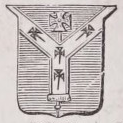
PALLA VICINO, Ferrante (1618-1644), a writer of pasquinades, who is now known chiefly for his early and tragical end, was a member of the old and widely ramified Italian family of the Pallavicini, and was born at Piacenza in 1618. He received a good education at Padua and elsewhere, and early in life entered the Augustinian order, residing chiefly in Venice. For a year he accompanied Ottavio Piccolomini, duke of Amalfi, in his German campaigns as field chaplain, and shortly after his return he published a number of clever but exceedingly scurrilous satires on the Roman curia and on the powerful house of the Barberini, which were so keenly resented at Rome that a price was set on his head. A Frenchman of the name of Charles de Breche decoyed him from Venice, where he was comparatively safe, to the neighbourhood of Avignon, and there betrayed him into his enemies’ hands. After fourteen months’ imprisonment and some observance of the formalities of a trial he was beheaded at Avignon on March 6, 1644.
His Opere Permesse was published at Venice in 1655, but being, as may be imagined, inferior in scurrility and grossness (Pallavicino’s specialities), are much less prized by the curious than the Opere Scelte (Geneva, 1660), which were more than once reprinted in Holland, and were translated into German in 1663....
PALLA VICINO, or Palla vicini, Sforza (1607—1667), cardinal, representative of another branch of the same family, was born at Rome in 1607. Having taken holy orders in 1630, and joined the Society of Jesus in 1638, he successively taught philosophy and theology in the Collegio Romano; as professor of theology he was a member of the congregation appointed by Innocent X. to investigate the Jansenist heresy. In 1659 he was made a cardinal by Alexander VII. His death occurred in 1667.
Pallavicino is chiefly known by his history of the council of Trent, written in Italian, *and published at Rome in two folio volumes in 1656-57 (2d edition, considerably modified, in 1666). His avowed object was to correct and supersede the very damaging work of Sarpi on the same subject, and he certainly, by virtue of his position, had access to many important sources from the use of which his predecessor had been precluded; the contending parties, however, are far from agreed as to the completeness of his success. The work was translated into Latin by a Jesuit named Giattinus (Antwerp, 1670). There is a good edition of the original by Zaccharia (6 vols. 4to, 1792-99). It was translated into German by Klitsche in 1835-37.
[225 words — estimated reading time: 2 minutes]
PALLADIO, Andrea (1518-1580), a native of Vicenza in the north of Italy, one of the chief architects of his century. Palladio’s early student life was spent in Rome, where he learned the practical part of his profession, and spent several years in making drawings of the buildings of ancient Rome. In 1547 he returned to his native city Vicenza, where he designed a very large number of fine buildings—among the chief being the Barbarano, Porti, and Chieregati palaces, as well as many others for various nobles of Vicenza and the neighbourhood. Perhaps his finest work in Vicenza itself was the Palazzo della Ragione, with two stories of open arcades of the Tuscan and Ionic orders. Most of these buildings, however, look better on paper than in reality, as they are mainly built of brick, covered with stucco, now in a very dilapidated condition. This does not affect the merit of their design, as Palladio intended them to have been executed in stone. His fame extended widely throughout Italy, and Pope Paul III. sent for him to Rome to report upon the state of St Peter’s. In Venice, too, Palladio built many stately churches and palaces, such as S. Giorgio Maggiore, the Capuchin church, and some large palaces on the Grand Canal. His last great work was the Teatro Olimpico at Vicenza, designed after a classical model; he died before its completion, and it was finished, though not altogether after the original design, by his pupil and fellow-citizen Scamc zzi....
In addition to his town buildings, Palladio designed many country villas in various parts of northern Italy. The villa of Capra is perhaps the finest of these, and has frequently been imitated. Palladio was a great student of classical literature, and was much influenced by Vitruvius’s great work on architecture. He also published in 1575 an edition with notes of Caesar’s Commentaries.
His great literary work was I quattro libri dell' Architettura, first published at Venice in 1570, which has passed into countless editions, and been translated into every European language. The original edition is a small folio, richly illustrated with well-executed full-page woodcuts of plans, elevations, and details of buildings,—chiefly either ancient Roman temples or else palaces designed and built by himself. The influence of this book on the architecture of Europe has been enormous. Among many others, an edition with notes was published in England by Inigo Jones, most of whose works, and especially the palace of Whitehall, of which only the banqueting room remains, owed much to Palladio’s inspiration. Though other Italian architects in the 16th century worked out and developed the same style, yet, in England at least, the term Palladian has been used to include all the results of this revival of classicalism. Vignola, Scamozzi, and Serlio were among the chief of Palladio’s contemporaries. The style adopted and partially invented by Palladio expressed a kind of revolt against the extreme licence both of composition and ornament into which the architecture of his time had fallen. Though often noble, dignified, and full of the most harmonious proportions, Palladio’s style is dull and lifeless, dominated by scholasticism, and regardless of considerations of utility and convenience.
He was fascinated by the stateliness and beauty of proportion which are the chief charms of the buildings of ancient Rome, and did not stop to reflect that reproductions of these, however great their archaeological accuracy, could not but be lifeless and unsuited to the wants of the 16th century. Palladio’s carefully measured drawings of ancient buildings are now of great value, as in many cases the buildings have altogether or in part ceased to exist.
The following is a short abstract of the contents of Palladio’s great work on architecture :—
Book I. Materials; construction; the five orders (Tuscan, Doric, Ionic, Corinthian, and Composite); the proportions of various parts of buildings; construction of stairs.
Book II. Plans and elevations of city and country houses designed by Palladio; restoration of Greek and Roman houses; sites; Palladio’s designs for palaces for certain Venetian and other noblemen, in Venice, Vicenza, Verona, and elsewhere.
Book III. Roads; bridges; piazze; piazze of Greeks and Romans; ancient basilica; modern basilica at Vicenza; baths and xysti of the Greeks.
Book IV. Temples of ancient Rome; Bramante ’ s “Tempietto” (S. Pietro in Montorio); Roman temples in Italy, outside Rome; Roman temples (such as those at Nîmes) outside Italy.
See Montanari, Γt7α di Andrea Palladio, 1749; Rigato, Osservazioni sopra Andrea Palladio, 1811; Magrini, Aiemorie intorno la vita di Andrea Palladio, 1845; Milιzia, A!enιorie degli Archiletti, 1781, ii. pp. 35-54; Symonds, Renaissance in Italy—Fine Arts, pp. 94-99.
[787 words — estimated reading time: 5 minutes]
PALLADIUM, an archaic wooden image {ξoavov) of Pallas, preserved in the citadel of Troy as a pledge of the safety of the city. It represented the goddess, standing in the stiff archaic style, holding the spear in her right hand. According to one story, Zeus had thrown it down from heaven when Ilus was founding the city of Ilium. Odysseus and Diomedes carried it off from the temple of Pallas, and thus made the capture of Troy possible. Many different cities boasted that this ancient image had passed into their possession—Athens, Argos, Rome, Lavinium, Ac. It is probable that the Palladium is an image of the warlike goddess Pallas, who must in origin be distinguished from Athena. The theft of the Palladium is a frequent subject in Greek art, especially of the earlier time.
[135 words — estimated reading time: 1 minute]
PALLADIUS, RutiliusTaurus Aemilianus, a writer of the 4th century after Christ, author of a poem on agriculture (De Re Rustica) in fourteen books. It is not certain whether he can be identified with any known historical person of the time. His work consists of an introductory book of general directions on agriculture, twelve books describing the operations suitable for the twelve months of the year, and a final book on the cultivation of trees. The material is derived from Columella and other earlier writers. The work was popular in the Middle Ages; it is conveniently arranged, but far inferior in every other respect to that of Columella.
[107 words — estimated reading time: 1 minute]
PALLAS. See Athena, vol. ii. 830....
PALLAS, Peter Simon (1741-1811), naturalist and traveller, was born in Berlin, September 22, 1741, the son of Simon Pallas, surgeon in the Prussian army, and professor of surgery in Berlin. Pallas was carefully educated by his father, being accustomed from boyhood to the use of several languages, among them English and French. He was intended for the medical profession, and his progress was such that in 1758 he lectured publicly on anatomy. Pallas studied at the universities of Berlin, Halle, Göttingen, and Leyden. He early displayed a strong leaning towards natural history investigations, which by the time he reached manhood almost monopolized his attention. In 1761 he came to England, where he spent a year, devoting himself to a thorough study of the collections he found there, and to a geological investigation of part of the English coast; and at the age of twenty-three he was elected a foreign member of the Royal Society. Pallas spent some time in Holland, where he found ample scope for investigation in his special subjects, the results of which appeared at the Hague in 1766 in his Elenchus Zoophy torum and Miscellanea Zoologica, and in 1767-1804 in his well-known Spicilegia Zoologica (Berlin). In 1768 he gladly accepted the invitation of the empress Catherine to fill the professorship of natural history in the Imperial Academy of Science, St Petersburg, and from that time until within a year of his death his home was in Russia. The great event of his life, and that by which he will be permanently remembered, was the expedition through Russia and Siberia in 1768-74, in which he acted as naturalist, in company with Falk, Lepechen, and Güldenstadt, the immediate object being the observation of the transit of Venus in 1769. In this leisurely journey Pallas went by Kasan to the Caspian, spent some time among the Calmucks, crossed the Urals to Tobolsk, visited the Altai Mountains, traced the Irtish to Kolyvan, went on to Tomsk and the Yenissei, crossed Lake Baikal, and extended his journey to the frontiers of China. Few explorations have been so fruitful as this six years’ journey. Pallas’s collections included all departments of natural history, and his observations extended to every point of interest in the region traversed and its inhabitants. The leading results were given in his Reisen durch verschiedene Provinzen des Russischen Reichs (3 vols. 4to, St Petersburg, 1771-76), richly illustrated with coloured plates. A French translation in 1788-93, in 8 vols., with 9 vols, of plates, contained, in addition to the narrative, the natural history results of the expedition; and an English translation in three volumes appeared in 1812. As special results of this great journey may be mentioned Sammlungen historischer Nachrichten über die Mongolischen Völkerschaften (2 vols. 4to, St Petersburg, 1776-1802); Novae Species Quadrupedum, 1778-79; Pallas’s contributions to the dictionary of languages of the Russian empire, 1786-89; Icones Insectorum, praesertim Rossiae Siberiaeque peculiarium, 1781-1806; Zoographia Rosso- Asiatica (3 vols., 1831); besides many special papers in the Transactions of the academies of St Petersburg and Berlin. The empress bought Pallas’s natural history collections for 20,000 roubles, 5000 more than he asked for them, and allowed him to keep them for life. He spent a considerable time in 1793-94 in visiting the southern provinces of Russia, and was so greatly taken with the Crimea that he determined to take up his residence there. The empress gave him a large estate at Simpheropol, and 10,000 roubles to assist in equipping a house. Though disappointed with the Crimea as a place of residence, Pallas continued to live there, devoted to constant research, especially in botany, till the death of his second wife in 1810, when he removed to Berlin, where he died September 8, 1811. The results of his journey in southern Russia were given in his Bemerkungen auf einer Reise durch die südlichen Statthalterschaften des Russischen Reichs (Leipsic, 1799-1801; English translation by Blagdon, vols. 5-8 of Modern Discoveries, 1802, and another in 2 vols., 1812). Pallas also edited and contributed to Neue Nordische Beiträge zur physikalischen Erd-und Völkerbeschreibung, Naturgeschichte, und Oekonomie (1781-96), published Illustrationes Plantarum imperfecte vel nondum cognitarum (Leipsic, 1803), and contributed to Buffon’s Natural History a paper on the formation of mountains, and to the Transactions of various learned societies a great number of special papers.
The solid value and great extent of Pallas’s contributions to natural science have been long admitted; his name is inseparably associated with the geography (in its varied branches) of Siberia and a large part of European Russia. That he had a marked influence on the progress of zoology there is no doubt; some authorities even hold that he changed the face of the science; while his geological investigations and speculations, if they did not revolutionize the young science (as has been maintained), greatly helped its progress. Though not in any sense brilliant either as an investigator or as a writer, Pallas is certainly one of the most important figures in the science of the latter half of the 18th century.
See the Essay of Rudolphi in the Transactions of the Berlin Academy for 1812; Cuvier’s Ëloge in his Recueil des Éloges Historiques, vol. ii.; and the Life in Jardine's Naturalists’ Library, vol. iv., Edin., 1843.
[6 words — estimated reading time: 1 minute]