CHESTER, an ancient city of England in West Cheshire, the capital of the county, situated on the river Dee, 20 miles from the open sea, 16 miles S.E. of Liverpool, and 179 miles N.W. of London by rail. The city is divided into four principal blocks by the four principal streets—Northgate Street, Eastgate Street, Bridge Street, and Watergate Street, which radiate at right angles from the Cross, and terminate in the four gates. These four streets exhibit in what are called “the Rows” a characteristic feature of the city. Their origin is a mystery, and has given rise to much controversy and speculation. In Eastgate Street, Bridge Street, and Watergate Street, the Rows exist on each side of the street throughout the greater part of their length, and may be described as continuous galleries open to the street, over and under which the houses lining the streets project, and which are formed as it were out of the front first-floor of the houses, approached by flights of steps from the roadway. The Rows are flagged or boarded under foot and ceiled above, thus forming a covered way, standing in the same relation to the shops, which are at their back, as the foot pavement does in other towns. In Northgate Street, on the other hand, the Row on the west side is formed as it were out of the ground floor of the houses, having cellars beneath, while on the east side the Row is formed at the same elevation as in the other three principal streets. In these streets are several examples of the old timbered houses of the 17th century, and some good specimens of modern imitations of them,—all combining to give a picturesque and foreign character to the town. There is also a chamber with stone groined roof of the 14th century in the basement of a house in Eastgate Street, and another ...of a similar character in Watergate Street. A mortuary chapel of the early part of the 13th century exists in the basement of a house in Bridge Street.
Chester is the only city in England that still possesses its walls perfect in their entire circuit of two miles. The gateways have all been rebuilt within the last hundred years,—the north and east gates on the site of the Roman gates. The Grosvenor Bridge, a single span of stone 200 feet in length, the largest, save one over the Danube, it is believed, in Europe, carries the road to Wrexham and Shrewsbury over the Dee on the south-west, while the old bridge of seven arches is interesting on account of its antiquity and picturesque appearance. The city possesses but few public buildings besides the cathedral and the churches. The castle, with the exception of “Caesar’s Tower,” and a round tower with adjacent buildings in the upper ward, was taken down towards the end of the last century, and replaced by a gateway, a barracks, a county hall, a jail, and assize courts,—all buildings of pure classic architecture after the design of Thomas Harrison, a local architect, who was also the architect of the Grosvenor Bridge. In Northgate Street stands the town hall, a handsome stone building of Continental-Gothic design, which replaced the old Exchange, burnt down in 1862. The market-place, a little to the south of it, was opened to the public in 1863. Near the north-west angle of the city walls is the infirmary, founded in 1761, capable of holding 100 beds, and furnished with a fever ward in a detached building to the east of it. The savings-bank is a pretty Gothic structure in Grosvenor Street, erected in 1853. The Grosvenor Hotel, rebuilt by its owner, the late marquis of Westminster, is a handsome building near the east gate, the upper stories being timbered in accordance with the style of the old houses in the city. Besides these may be mentioned the general post-office, designed after the Elizabethan style, the custom-house, the free library, the music hall, and the training college. Among the most interesting of the ancient houses are Derby House, bearing the date 1591, Bishop Lloyd’s House, and God’s Providence House in Watergate Street, and the Bear and Billet in Lower Bridge Street; the three last bear dates in the 17th century. The Natural Science Society, founded by Canon Kingsley, and the Archaeological Society have their lecture-rooms and museums at the Old Albion in Lower Bridge Street.
Besides the Benedictine Abbey of St Werburgh, the Franciscans, the Dominicans, and the Carmelites had houses in Chester, and the sites of the first and last are still commemorated in the names of Grey Friars and White Friars; St John’s, without the walls, was a collegiate church, with a dean, seven prebendaries, and four vicars. Chester was for a time in the diocese of Lichfield and Coventry, but in 1075, Peter, then bishop, restored the seat of the see to Chester, and made St John’s his cathedral; his successor, however, removed the seat back to Coventry, and in 1541 Henry VIII. erected Chester into an independent see, and the abbey church of St Werburgh into the cathedral of the diocese. He richly endowed the cathedral, and constituted in it a dean and six prebendaries, now reduced to four, who are styled canons. The King’s School for public education was founded by the same patron, and in it the king provided that 24 poor scholars should be taught free of charge. The school has now, however, been remodelled, and placed under a board of governors by the Endowed Schools Commissioners. Within the walls are the parish churches of St Oswald, founded about 1093; St Peter, founded before the Conquest; St Michael, probably founded before 1118; St Bridget, founded prior to 1224; the Holy and Undivided Trinity, founded in or before the 12th century; St Mary, founded probably in the 12th century; St Martin, founded prior to 1250; and St Olave, founded prior to the 12th century. The two last-named parishes are amalgamated with St Bridget and St Michael respectively. In the suburbs are St John’s, St Paul in Boughton, Christ Church in Newton, All Saints in Hoole, and St Thomas. Among the Nonconformist places of worship, which represent all the principal denominations, may be mentioned the Unitarian Chapel in Crook Lane, built originally by the followers of Matthew Henry, one of the ejected ministers. For the recreation of the inhabitants provision is made by the New Grosvenor Park, presented to the town in 1867 by the marquis of Westminster, and the Roodee, a level tract at the base of the city walls appropriated as a race course.
The original charter which the city received from Earl Ranulph was confirmed, and the privileges extended, by many subsequent charters granted by different sovereigns and princes. Of these the most important were that of Edward I., which granted the office of coroner, defined and extended the jurisdiction of the courts of civil and criminal jurisdiction, and granted freedom from toll, &c., to the citizens throughout his dominions; that of Edward, the Black Prince, which defined and particularized the boundaries of the city, giving it a circuit of 12 or 14 miles, and granted jurisdiction of the river Dee to the mayor and citizens from a spot then and still called “Iron Bridge” above the city, to a point near Hoylake at the mouth of the river; and lastly, the charter of Henry VII., which ordained that the corporation should consist of a mayor, 24 aidermen, and 40 common councilmen, to be elected annually, created the office of recorder, regulated and gave exclusive jurisdiction to the mayor’s and sheriff’s courts, empowered the mayor to have his sword of state carried (in the absence of the king and his heirs) before all others with point upwards, and finally erected the city into a county by itself with a separate commission of the peace. The corporation thus constituted continued till the passing of the Municipal Corporations Act, under which the government of the city is now vested in the mayor, 10 aidermen, and 30 councilmen. The recorder is now a barrister appointed by the Crown. He is the judge of the local courts, called the Portmote (originally the mayor’s court), the Pentice (originally held before the two sheriffs in a building now pulled down, called the Pentice), and the Passage Courts now fallen into disuse. He also presides at the city court of quarter sessions, which now alone retains a limited criminal jurisdiction, which once the city courts possessed even to the infliction of capital punishment.
The population of the municipal (as distinguished from the parliamentary) borough was, according to the census of 1861, 31,110, and in 1871, 35,257 (16,910 males and 18,347 females). The area of the municipal borough is 3437 acres, and that of the parliamentary, which includes parts of Hoole, Saltney, Great Boughton, and Newtown, 3455 acres, containing a population in 1871 of 38,390, and returning two members to parliament. The trade of the town is nominally represented by 23 guilds. Within the walls there is no extensive manufacture carried on, save that of shoes and boots for exportation and the wholesale home trade, and furniture and upholstery. In the suburbs shot and white and sheet lead are very largely manufactured, and flour of superior quality is produced. There are also several iron foundries, and the more humble manufacture of pipe-making has been carried on from a remote period. As a port there can be little doubt that Chester was at one time of importance, but the silting up of the channel of the Dee affected its commerce injuriously as early as the 15th century, and now the shipping trade is inconsiderable.
The history of Chester reaches back to very early times. Higden ascribes the foundation of the town to a very remote period; but the Welsh name by which it was even in Higden’s day and is still known—Caerlleon Vawr or Caerlleon ar Dyfyrdwy, which means the “great camp or station of the legion on Dee,”—points to a Roman origin. It is the Deva of the Roman Itineraries, and from its position at the head of the then most important estuary on this part of the coast, and at a point where several Roman roads converged, it must soon have risen in prosperity and importance. The dignity of a Roman colonia has been claimed for it by some writers, but there is no certain evidence on which such a claim can be grounded. The pick and spade, however, have revealed numerous proofs that it was “no mean city.” Among numerous altars from time to time exhumed is one of rare occurrence with a Greek inscription, and dedicated by Hermogenes, a physician. Of the latest discoveries the most remarkable was made in pulling down the Feathers Hotel on the east side of Bridge Street, when the remains of a fine basilica were brought to light, having a row of seven Corinthian pillars on either side once supporting its roof, and a series of apartments on its south side,—probably in connection with baths,—floored with tesselated and herring-bone tile pavements, and warmed by an extensive hypocaust, a portion of which is still to be seen underneath some adjoining houses.
The town was walled, and in form was rectangular and equilateral or nearly so, but was not co-extensive with the present city. The four principal streets followed generally the line of the present streets running north and south and east and west, crossing each other in the centre of the town. The southern wall of the town, running from a point near the distance chair in the racecourse, past St Bridget’s rectory eastwards, cut across the present city, about the top of Lower Bridge Street, just below St Michael s Church, and joined the wall on the eastern side somewhere a little to the north of what are now called “The Wishing Steps,” and there was probably a tower at each angle of the wall. A Roman arch, however, still existing and impinging upon the Keep or “Caesar's” Tower in the Castle, and also another arch (now removed), incorporated into the walls near the old bridge, and called “The Ship Gate,” attest the existence of some outwork overhanging the river for the protection probably of the trajectus by which the Roman roads to the south and west, emerging from the town by the southern gate, crossed at a point just below. The renowned XXth Legion was stationed here from an early period of the Roman occupation to as late as the third century.
After the departure of the Romans, Chester appears to have been possessed in turn by Britons, Saxons, and Danes; in 894 it was found a deserted city by the Danes, who then took possession, and were in turn starved out by a besieging Saxon army. Earl Ethelred restored it in 908, extending its walls so as to embrace the castle. After the defeat of the Danes by Edmund in 942, Chester for a time enjoyed comparative repose. Athelstan revived its mint; Edgar received homage of his vassals there; and Harold’s queen found a home there after the battle of Hastings. Mercia had up to this time been governed by its earl. Beyond Chester lay the still hostile Welsh, for the reduction of whom the place afforded an important basis of operations, this led to the establishment after the Conquest oftheNorman earldom of Chester, which was first granted to Gher-bod, a noble Fleming. After him Hugh Lupus, the nephew of the Conqueror, was invested as earl of Chester, with sovereign or palatinate authority over the tract of country now represented by the county of Cheshire, and the coast-line of Flintshire, as far as Rhuddlan, with Chester as the seat of his Government. In the castle, buflt, or at least reconstructed by Earl Hugh, the earl assembled his court or council; and here too sat the exchequer and other courts. Earl Hugh was the founder of the Benedictine Abbey of St Werburgh, which he richly endowed. It was during the rule of these Norman earls that Chester received at the hands of Earl Ranulph I. its first charter, and took rank as a city, but the language of this charter indicates that Chester already possessed some municipal privileges. Under this charter were established local courts of civil and criminal jurisdiction, which were the germs of the Portmote, Pentice, and Passage Courts. On the death of Earl John in 1237, Henry III. seized the earldom and it has ever since been an apanage of the Crown. The county, however, retained its palatinate character, and Chester still continued to be the seat of its jurisdiction. Though no longer the metropolis of an almost independent dominion, Chester still, as the capital of the palatinate and the key to North Wales, yet unsubdued, ranked high among the cities of the west of England, was often honoured by royal visits, and was the object of attack and defence during the many civil wars. In 1256 she narrowly escaped the fury of Llewelyn, who, we are told, carried fire and sword to her very gates. Edward I. visited the city on several occasions; in 1276 he summoned Llewelyn to do him homage here, and the next year he marched through with a powerful army to Rhuddlan. In 1300 his son Edward, the first English Prince of Wales, here received the final submission of the Welsh to the sovereignty of England. Hither Henry of Lancaster led his captive sovereign, Richard IL, from Flint Castle, and imprisoned him in a tower over the outer gateway of the Castle. In 1459 queen Margaret visited the city, and Henry the VII., accompanied by his queen and mother in 1494. In 1507, 1517, and 1550, Chester shared with other places the visitation of the sweating sickness, which carried off many of its inhabitants. It was also so severely scourged by the plague, 1602 to 1605, that the city fairs were suspended, and the court of exchequer removed to Tarvin, and the assizes to Nantwich. In 1647-48 this epidemic for the last time raged with a terrible fatality; from June 22 to April 20 it is said that 2099 persons perished of the plague in the several city parishes. But of all the events in the history of Chester, there is none so memorable as the protracted siege which the city endured in its loyalty to Charles I. The king, having hoisted his standard at Nottingham, arrived at Chester in the autumn of 1642, where he was enthusiastically received. The sacrifices made by the citizens for the royal cause were great. In 1644, the pecuniary levies upon them amounted to as much as £200 every fortnight. The siege began in July 1643, and in the autumn of 1645 the assailants, despairing of taking it by assault, converted the siege into a blockade. In 1646-7 the citizens were in such extremities as to be in want of the commonest necessaries of life. It was only after a tenth summons that, on February 3, 1646, they at last agr eed to the articles of surrender, by which the garrison were allowed to march out with all the honours of war, the safety of the persons and property of the citizens with liberty to trade was secured, and the sanctity of the sacred edifices and their title deeds preserved. In 1659 Sir George Booth and a large party of the citizens seized the garrison for Charles II., then still an exile, but they were afterwards repulsed in an action fought near Winnington bridge, by Lambert, the Parliamentary general. In 1660 the joy felt by the citizens at the Restoration, was expressed by the magnificent reception accorded to the learned Dr Brian Walton, the new bishop of Chester, on his coming to take possession of his see. The spirit of the inhabitants evinced, however, a change in 1683, when the presence of the duke of Monmouth was the cause of a tumultuous mob, who, after committing other acts of violence, forced the cathedral doors, destroyed most of the painted glass, demolished the font, and did other damage there. James II. visited the city in 1687, and his successor, William III., in 1690. Coming to more modem times, the city accorded a hearty and brilliant welcome to the Prince of Wales on the 14th October 1869, when he honoured them with his presence to open the new Town Hall. (W. W. F. )
CHESTER, a city of the United States, in the county of Delaware, Pennsylvania, on the right bank of the Delaware River, 10 miles south-west of Philadelphia by the railway to Wilmington. It has five or six churches, two high schools, and a national hall, and carries on the manufacture of cotton and woollen goods, machinery, and carriages. Founded by the Swedes in 1643 under the name of Upland, it ranks as the oldest town in the State, and was the seat of the provisional assembly held by Penn in 1682. From that date till the formation of Delaware county in 1789, it was the chief town of the county of Chester,—a position now held by the city of West Chester. Population in 1850, 1667; and in 1870, 9485.

[3,121 words — estimated reading time: 18 minutes]
CHESTER-LE-STREET, a market-town of England in the county of Durham, near the River Wear, six miles north of Durham, on the North-Eastern Railway. The principal building is the parish church of St Mary and St Cuthbert, an interesting old Gothic structure, restored in 1862, with a tower 156 feet in height. There is a union workhouse at the south end of the town, which consists of two long parallel streets. Chester-le-Street is a place of considerable antiquity; under the name of Cuneceastre, it was made the see of a bishop in 882, and continued to be the head of the diocese till the Danish invasion of 995. During that time the church was the repository of the shrine of St Cuthbert, which was then removed to Durham. About a mile along the river is Lumley Castle, the seat of the earl of Scarborough, and about two miles to the northward lies Lambton Castle, the residence of the earl of Durham, built in 1797 on the site of the old House of Harraton. The iron manufacture is prosecuted to a considerable extent, and about 4000 persons are employed in the coal mines of the neighbourhood. In 1871 the population of the town was 2450, and of the township, 4205.
[214 words — estimated reading time: 2 minutes]
CHESTERFIELD, a municipal borough and markettown of England, in East Derbyshire, 12 miles south of Sheffield by the Midland Railway. It is situated on the Rother and Hipper, and is the terminus of a canal extending a distance of 46 miles to the Trent at Stockwith. It is irregularly built, with narrow streets, but has a spacious market-place. The church of All-Saints is a large and elegant edifice of the 13th century, with a remarkable twisted spire 230 feet high, which has given rise to considerable discussion as to whether it was so constructed or owes its deformity to the warping of the woodwork. There are eight or nine dissenting churches, a free grammar school, founded by Queen Elizabeth, and rebuilt in 1710 and 1845, a girls’ industrial school established in 1819, and various other educational institutions, a municipal hall erected in 1849, a market-hall (which dates from 1855-7 and contains a corn-exchange), a town-library, a mechanics’ institute, a prison, assembly rooms, a hospital, a theatre, and an institute of mining, civil, and mechanical engineers. The manufactures include cotton, silk, earthenware, machinery, and tobacco; and there are coal, iron, and lead mines in the vicinity. Races are held on Whittington Common, about a mile from the town, in the neighbourhood of the famous Revolution House. The population of the municipal borough in 1861 was 9836, and in 1871 it was 11,427. Chesterfield was a Roman station on the road from Derby to York, and its name is partly of Roman origin. At the time of the Conquest it was of but little importance, but in the reign of King John it received a charter of incorporation. In the year 1266 the rebellious barons were defeated in the neighbourhood by Henry, the nephew of Henry III. In 1642 the town was occupied by ...the forces of Sir John Gell, and in 1643 by Sir Thomas Fairfax.
CHESTERFIELD, Philip Dormer Stanhope, Fourth Earl of (1694-1773), the son of Philip Stanhope, the third earl, and Elizabeth Savile, daughter of the marquis of Halifax, was born in London. Deprived at an early age of his mother, the care of the little Lord Stanhope devolved upon his grandmother, the marchioness of Halifax, a lady of culture and connection, whose house was frequented by the most distinguished Whigs of the epoch. He soon began to prove himself possessed of that systematic spirit of conduct and effort which appeared so much in his life and character. Divined by Ruvigny, earl of Galway, who perceived in him a nascent aptitude for pleasure and politics overlaid with a strong natural tendency to indolence, he was advised by that nobleman, if he would become a man of mark, to rise early; he acquired the habit, and kept it. His education, commenced under a private tutor, was continued (1712) at Trinity Hall, Cambridge; here he seems to have read hard, and to have acquired a considerable knowledge of ancient and modern languages. The great orators of all times were a special object of study with him, and he describes his boyish pedantry pleasantly enough, but by no means without a touch of self-satisfaction in the memory. His university training was supplemented (1714) by a Continental tour, untrammelled by a governor; at the Hague his ambition for the applause awarded to adventure made a gamester of him, and at Paris he began, from the same motive, that worship of the conventional Venus, the serious inculcation of which has earned for him the largest and most unenviable part of his reputation.
The death of Anne and the accession of George I. opened, up a career for him and brought him back to England. His relative James Stanhope, the king’s favourite minister, procured for him the place of gentleman of the bedchamber to the Prince of Wales. In 1715 he entered the House of Commons as member for St Germans, and when the impeachment of James, duke of Ormond (June 21, 1715), came before the House, he used the occasion to put to proof his old rhetorical studies. His maiden speech was youthfully fluent and dogmatic; but on its conclusion the orator was reminded, with many compliments, by an honourable member, that he wanted six weeks of his majority, and consequently that he was amenable to a heavy fine for speaking in the House. Lord Stanhope quitted the Commons with a low bow, and started for the Continent. From Paris he rendered the Government important service by gathering and transmitting information respecting the Jacobite plot; and in 1716 he returned to England, resumed his seat, and took frequent part in the debates. In that year came the quarrel between the king and the heir apparent. Stanhope, whose politic instinct obliged him to worship the rising rather than the setting sun, remained faithful to the prince, although the ministry made several attempts to win him over. In 1723 a vote for the Government got him the place of captain of the yeomen of the guard; his happy reply to his predecessor, Lord Townshend, is a fine example of spirituel urbanity, and is valuable as indicating, among other examples, his contempt for the money-jobbing system that obtained at court. In 1725, on the revival of the Bath, the red riband was offered to him, but was declined.
In 1726 his father died, and Lord Stanhope became earl of Chesterfield. He took his seat in the Upper House, and his oratory, never effective in the Commons by reason of its want of force and excess of finish, at once became a power. In 1727, on the accession of George IL, Chesterfield was sent to the Hague as ambassador. In this place his tact and temper,his dexterity and discrimination, enabled him to do good service, and he was rewarded with Walpole’s friendship, a Garter, and the place of Lord High Steward. In 1732 there was born to him, by a certain Madame du Bouchet, the son, Philip Stanhope, for whose advice and instruction were afterwards written the famous Letters. In the same year, being somewhat broken in health and fortune by his sojourn abroad, he resigned his embassy and returned to England. A few months’ rest enabled him to resume his seat in the Lords, of which he was one of the acknowledged leaders. He supported the ministry, but his allegiance was not the blind fealty Walpole exacted of his followers. The Excise Bill, the great premier’s favourite measure, was vehemently opposed by him in the Lords, and by his three brothers in the Commons. Walpole bent before the storm, and abandoned the measure; but Chesterfield was summarily dismissed from his Stewardship. For the next two years he led the opposition in the Upper House, leaving no stone unturned to effect the downfall of the man who had wronged him. In 1742 Walpole fell, and Carteret reigned in his stead. The new ministry, however, had not Chesterfield either in its ranks or among its supporters. He remained in opposition, distinguishing himself by the courtly bitterness of his attacks on George II, who learned to hate him violently. In 1744 the king was compelled to abandon Carteret, and the coalition or “Broad Bottom” party, led by Chesterfield and Pitt, came into office. In the troublous state of European politics the earl’s conduct and experience were more useful abroad than at home, and he was sent to the Hague as ambassador a second time. The success of his mission was complete; and on his return a few weeks afterwards he received the lord-lieutenancy of Ireland, a place he had long coveted.
Short as it was, Chesterfield’s Irish administration was of great service to his country, and is unquestionably that part of his political life which does him most honour. To have conceived and carried out a policy which, with certain reservations, Burke himself might have originated and owned is indeed no small title to regard. The earl showed himself finely capable in practice as in theory, vigorous and tolerant, a man to be feared, and a leader to be followed; he took the government entirely into his own hands, repressed the jobbery traditional to the office, established schools and manufactures, and at once conciliated and kept in check the Orange and Popish factions. In 1746, however, he had. to exchange the lord-lieutenancy for the place of Secretary of State. With a curious respect for those theories his familiarity with the secret social history of France had caused him to entertain, he hoped and attempted to retain a hold over the king through the influence of Lady Yarmouth, though the futility of such means had already been demonstrated to him by his relations with Queen Caroline’s “ma bonne Howard.” The influence of Newcastle and Sandwich, however, was too strong for him; he was thwarted and over-reached; and in 1748, he resigned the seals, and returned to cards and his books with the admirable composure which was one of his most striking characteristics.
The dukedom offered him by George II., whose ill-will his fine tact had overcome, was refused. He continued for some years to attend the Upper House, and to take I>art in its proceedings. In 1751, seconded by Lord Macclesfield, President of the Royal Society, and Bradley, the eminent mathematician, he distinguished himself greatly in the debates on the calendar, and succeeded in making the new style a fact. Deafness, however, was gradually affecting him, and he withdrew little by little from society and the practice of politics. In 1754 occurred the famous dispute with Johnson over the dedication to the English Dictionary. This quarrel (to which are owing the doctor’s noble letter and some half dozen of his roughest mots, and the earl’s clever portrait of the “intelligent Hottentot ”), with the neglect it assumed on Chesterfield’s part, has been fatal to his reputation as a man of heart. During the twenty years of life that followed this episode, Chesterfield wrote and read a great deal, but went little into society. In 1768 died Philip Stanhope, the child of so many hopes; and the earl, who had no children by his wife, Melusina von Schulemberg, illegitimate daughter of George I., whom he married in 1733, adopted his godson the heir to the title and estates. His famous jest (which even Johnson allowed to have merit),—“Tyrawley and I have been dead these two years, but we don’t choose to have it known”—is the best description possible of his humour and condition during the latter part of this period of decline. To the deafness was added blindness, but his memory and his fine manners only left him with life; his last words (“Give Dayrolles a chair ”) prove that he had neither forgotten his friend nor the way to receive him. He died on the 24th of March 1773.
Chesterfield was selfish, calculating, and contemptuous; he was not naturally generous, and he practised dissimulation till it became part of his nature. In spite of his brilliant talents, and of the admirable training he received, his life, on the whole, cannot be pronounced a success. His anxiety and the pains he took to become an orator have been already noticed, and Horace Walpole, who had heard all the great orators, preferred a speech of Chesterfield’s to any other; yet the earl’s eloquence is not to be compared with that of Pitt. Samuel Johnson, who was not perhaps the best judge in the world, pronounced his manners to have been “exquisitely elegant;” yet as a courtier he was utterly worsted by Robert Walpole, whose manners were anything but refined, and even by Newcastle. He desired to be known as a protector of letters and literary men; and his want of heart or head over the Dictionary dedication, though explained and excused by Croker, none the less inspired the famous change in a famous line—“Toil, envy, want, the patron, or the jail.” His published writings have had with posterity a very indifferent success; his literary reputation rests on a volume of letters never designed to appear in print. The son for whom he worked so hard and thought so deeply failed especially where his father had most desired he should succeed, becoming, not a fine gentleman, but a commonplace book-worm. As a politician and statesman, Chesterfield’s fame rests on his short but brilliant administration of Ireland. As an author he stands or falls by the Letters to his Son, first published by Stanhope’s widow in 1774. The Letters are brilliantly written,—full of elegant wisdom, of keen wit, of admirable portrait-painting, of exquisite observation and deduction. Against the charge of an undue insistence on the external graces of manner Chesterfield has been adequately defended by Lord Stanhope (History, iii. 34). Against the often iterated accusation of immorality, it should be remembered that the Letters reflected the morality of the age, and that their author only systematized and reduced to writing the principles of conduct by which, deliberately or unconsciously, the best and the worst of his contemporaries were governed.
See Chesterfield’s Miscellaneous Works, London, 1777-8, 2 vols. 4to; and Letters to his Son (edited by Lord Mahon), London, 1845- 51, 5 vols. See also Lord Mahon (Stanhope), History of England from the Peace of Utrecht to the Pease of Versailles.
[322 words — estimated reading time: 2 minutes]
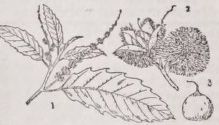
CHESTNUT. The Spanish or Sweet Chestnut, Castanea vesca (natural order, Corylaceoe), is a stately and magnificent tree, native of the countries bordering on the Mediterranean, but also ripening its fruit in sheltered situations as far north as Scotland. It lives very long, attains a large size, spreading its branches widely, and it has large lanceolate serrate leaves, long pendulous male catkins, with fewer inconspicuous female flowers, the fruit being an echinate capsule, containing from two to five nuts, of which seldom more than three are mature. The largest known chestnut tree is the famous Castagno di cento caυalli, or the chestnut of a hundred horses, on the slopes of Mount Etna, a tree which when measured nearly a hundred years ago, by Count Borch, was found to have a circumference of 190 feet. By many observers it has been maintained that this colossal tree consisted of a fusion of several trunks; but many specimens not much smaller exist in the neighbourhood, and by digging around it has been found that all the trunks end in one root. The wood of the sweet chestnut is valued by cabinet-makers and coopers; and among European timbers it was at one time esteemed second to the oak, which it so closely resembles that in old wood-work the two timbers are very difficult to distinguish. Chestnuts (the fruit of the tree) are extensively imported into Great Britain, and roasted are much eaten as a delicacy. In a raw state they have a sweet taste, but are difficult of digestion. The trees are very abundant in the south of Europe, and chestnuts bulk largely in the food resources of the poor in Spain, Italy, Switzerland, and Germany. In Italy the kernels are ground into meal, and used for thickening soups, and even for bread-making. In North America, the fruits of an ...allied species, C. americana i are similarly eaten.
The Horse Chestnut, Aesculus IIippocastanum, is in no way allied to the sweet chestnut except in name. It is a strikingly beautiful tree, especially in spring, with its large digitate leaves, and conspicuous spikes of white flowers. A useful starch maybe extracted from its kernels, but this has not hitherto been practised on an economic basis. The entire tree must be regarded as more ornamental than useful.
[384 words — estimated reading time: 3 minutes]