1. Having a very thin edge or a fine point; keen; acute; not blunt. Thus we may say, a sharp knife, or a sharp needle. A sharp edge easily severs a substance; a sharp point is easily made to penetrate, it.
2. Terminating in a point or edge; not obtuse; as, a hills terminates in a sharp peak, or a sharp ridge.
3. Forming an acute or too small angle at the ridge; as a sharp roof.
4. Acute of mind; quick to discern or distinguish; penetrating; ready at invention; witty; ingenious.
9. Affecting the organs of hearing like sharp points; poercing; penetrating; shrill; as a sharp sound or voice; a sharp not or tone; opposed to a flat note or sound.
1. Having a very thin edge or fine point; of a nature to cut or pierce easily; not blunt or dull; keen.
2. Terminating in a point or edge; not obtuse or rounded; somewhat pointed or edged; peaked or ridged; as, a sharp hill; sharp features.
3. Affecting the sense as if pointed or cutting, keen, penetrating, acute: to the taste or smell, pungent, acid, sour, as ammonia has a sharp taste and odor; to the hearing, piercing, shrill, as a sharp sound or voice; to the eye, instantaneously brilliant, dazzling, as a sharp flash.
4. High in pitch; acute; as, a sharp note or tone.
5. Raised a semitone in pitch; as, C sharp (C/), which is a half step, or semitone, higher than C.
6. So high as to be out of tune, or above true pitch; as, the tone is sharp; that instrument is sharp. Opposed in all these senses to flat.
7. Very trying to the feelings; piercing; keen; severe; painful; distressing; as, sharp pain, weather; a sharp and frosty air.
SHARP, James (1618-1679), archbishop of St Andrews, was the son of William Sharp, sheriff-clerk of Banffshire, and of IsabelLeslie, daughter of Leslie of Kininvie, of the family of Halyburtons of Pitcur in Angus, and was born in Castle Banff on May 4, 1618. He was a clever boy, and his early disposition for the church led to his being called in jest “the young minister.” In 1633 he went to King’s College, Aberdeen, and graduated in 1637. He there studied divinity for one or two years, and probably derived his Episcopal tendencies from the “Aberdeen doctors,” Aberdeen being at that time the home of Episcopal sentiment. On the outbreak of the Covenanting war he went to England (1639) and visited Oxford and perhaps Cambridge, becoming acquainted with the principal English divines. Upon his return he was chosen in 1643 through the influence of Lord Rothes to be one of the “regents” of philosophy in St Leonard’s College, St Andrews. He appears to have continually risen in reputation until in December 1647 he went through his ordinary trials for the ministerial office before the presbytery of St Andrews, and was appointed minister of Crail in Fifeshire, on the presentation of the earl of Crawford, on January 27, 1648. In the great schism of Resolutioners and Protestors, he, with the large majority of educated men, took active part with the former; he was the friend of Baillie, Douglas, Dickson, Wood, Blair, and others, and as early as March 1651 was recognized as one of the lead ing men of the party. His first public employment was in 1656, when he went to London on their behalf to endeavour to counteract with the Protector the influence of Warriston, who was acting for the Protestors. Here he became acquainted with Calamy, Ash, and other leading London ...Presbyterian ministers, and letters passed between him and Lauderdale, then prisoner in the Tower. He displayed all his undoubted talents for petty diplomacy and considerable subtlety in argument while on this service, and his mission was decidedly successful. He returned to Scotland in 1659, but upon Monk’s march to London was again, in February 1660, sent by the Resolutioners to watch over their interests in London, where he arrived on February 13. He was most favourably received by Monk, to whom it was of great importance to remain on good terms with the dominant party in Scotland. His letters to Douglas and others during this period, if they may be trusted, are useful towards following the intrigues of the time day by day. It must not be forgotten, however, that there is good reason for thinking that Sharp had already made up his mind not to throw away the chances he might have of prominent employment under the Restoration. In the beginning of May he was despatched by Monk to the king at Breda “to deal that he may be sent with a letter to the London Presbyterian ministers, showing his resolution to own the godly sober party.” His letters on this occasion to Douglas show that he regarded himself equally as the emissary of the Scottish kirk. It is to be noticed that he was also the bearer of a secret letter from Lauderdale to the king. He was in fact playing a game admirably suited to his peculiar capacity for dark and crooked ways of dealing. There can be little doubt that while on this mission he was finally corrupted by Charles and Clarendon, not indeed so far as to make up his mind to betray the kirk, but at any rate to decide in no way to imperil his own chances by too firm an integrity. The first thing that aroused the jealousy of his brethren, who, as Baillie says, had trusted him as their own souls, was his writing from Holland in commendation of Clarendon. This jealousy was increased on his return to London (May 26) by his plausible endeavours to stop all coming of Presbyterian commissioners from Scotland and Ireland, though he professed to desire the presence of Douglas and Dickson, by his urgent advice that the Scots should not interfere in the restoration of Episcopacy in England, and by his endeavours to frustrate the proposed union of Resolutioners and Protestors. He informed them that Presbyterianism was a lost cause in England, but as late as August 11 he intimated that, though there had been great danger for the Scottish kirk as well, this danger had been constantly and successfully warded off by his efforts. He returned to Scotland in this month, and busied himself in endeavouring to remove all suspicions of his loyalty to the kirk; but at the same time he successfully stopped all petitions from Scottish ministers to king, parliament, or council. His letters to Drummond, a Presbyterian minister in London, and to Lauderdale, without absolutely committing him, show clearly that he was certain that Episcopacy was about to be set up. How far he was actively a traitor in the matter had always been fairly disputed until the question was at last set at rest by the discovery of his letter, dated May 21, from London, whither he went in April 1661, to Middleton, the High Commissioner, whose chaplain he now was, from which it is proved that he was in confidential communication with Clarendon and the English bishops, that he was earnestly and eagerly co-operating in the restoration of Episcopacy in Scotland, that he had before leaving Scotland held frequent conferences with Middleton on the subject (a fact which he had explicitly and vehemently denied) and was aware that Middleton had all along intended it, and that he drew up and was directly responsible for the quibblingproclamation of June 10, the sole purpose of which was “the disposing of minds to acquiesce in the king’s pleasure.” The original of this letter (which is printed in the Lauderdale Papers and in the Scottish Review) is preserved in the Museum of the Society of Antiquaries, Edinburgh. It should be noticed that as late as the end of April, on the eve of starting on his mission to court with Rothes and Glencairne, he declared to Baillie that no change in the kirk was intended. The mask was at length dropped in August, when Episcopacy was restored, and Sharp was appointed archbishop of St Andrews. He and Leighton, Fairfoul, and Hamilton “were dubbed, first preaching deacons, then presbyters, and then consecrated bishops in one day, by Dr Sheldon and a few others.” On April 8th the new prelates entered Scotland, and on the forenoon of April 20, 1662, Sharp preached his first sermon at St Andrews.
Sharp had carefully kept on good terms with Lauderdale, and when the Billeting Plot was concocted in September 1662 against the latter by Middleton, he managed to avoid acting against him; indeed it is probable that, after being appointed under an oath of secrecy to be one of the scrutineers of the billets, he, in violation of the oath, was the cause of Lauderdale receiving timely information of the decision against him; and yet he shortly went up to London to explain the whole affair in Middleton’s interest. When Lauderdale’s supremacy was established he readily co-operated in passing the National Synod Act in 1663, the first step in the intended subjection of the church to the crown. In 1664 he was again in London, returning in April, having secured the grant of a new church commission. His vanity also had been gratified by his being allowed to take precedence of the chancellor at the council. He harassed the ministers who were with his old friend James Wood when he signed his well-known deathbed confession; he cited and fined others, as well as laymen, for withdrawing from the churches; he urged the thorough prosecution of the arbitrary powers granted to the commission, and complained of the slackness of his fellow commissioners. So oppressive was his conduct and that of others of the bishops that it called forth a written protest from GilbertBurnet. Sharp at once summoned him before the bishops and endeavoured to obtain a sentence of deprivation and excommunication against him, but was overruled by his brethren. On the death of Glencairne, the chancellor’s greatest efforts were made to secure the vacant office for Sharp, and he was not inactive in his own interest; the place was not, however, filled up until 1667, and then by the appointment of Rothes. He was in strict alliance with Rothes, Hamilton, and Dalyell, and the other leaders of oppression, and now placed himself in opposition to the influence of Lauderdale, attacking his friends, and especially the earl of Kincardine. In 1665 he was again in London, where, through his own folly and mendacity, he suffered a complete humiliation at the hands of Lauderdale, well described by the historian Burnet. With Rothes he now in great part governed Scotland, and the result of their system of violence and extortion was the rising of the Covenanters, during which, being in temporary charge during Rothes’s absence, he showed, according to Bellenden, the utmost fear, equalled only by his cruelty to the prisoners after the rout of Pentland. When the convention of estates met in January 1667 he received his first rebuff, Hamilton being substituted for him as president. He now tried to curry favour with Lauderdale, to whom he wrote letters of the most whiningcontrition, and who extended him a careless reconciliation. The expressions of contempt for him which occur at this time, as previously, in the letters of Robert Moray,
Argyll, and others of Lauderdale’s correspondents, are frequent and very amusing. For a time he made himself actively useful, and was instrumental in restraining his brethren from writing to London to complain of the conciliation policy which for a while Lauderdale carried out, a transaction in which he displayed the utmost effrontery of lying; and, with slight attempts to free himself, he continued faithful in his new service. On July 10, 1668, an attempt was made upon his life by Robert Mitchell, who fired a pistol at him while driving through the streets of Edinburgh. The shot, however, missed Sharp, though his companion the bishop of Orkney was wounded by it, and Mitchell for the time escaped. In August Sharp went up to London, returning in December, and with his assistance, nominally indeed at his suggestion, Tweeddale’s tolerant proposals for filling the vacant parishes with some of the “outed” ministers were carried out. In the debates on the Supremacy Act, by which Lauderdale destroyed the autonomy of the church, he at first showed reluctance to put in motion the desired policy, but gave way upon the first pressure. When, however, Leighton, as archbishop of Glasgow, endeavoured to carry out a comprehension scheme, Sharp actively opposed him, and expressed his joy at the failure of the attempt. From this time he was completely subservient to Lauderdale, who had now finally determined upon a career of oppression, and in 1674 he was again in London to support this policy. In this year also Mitchell, who had shot at him six years before, was arrested, Sharp himself having recognized him, and, upon Sharp’s promise to obtain a pardon, privately made a full confession. When brought into the justiciary court, however, he refused to repeat the confession, whereupon the promise of pardon was recalled; the prisoner was sent to the Bass, and was not brought to trial for four years. In 1678, however, the country being again in great disorder, he was tried on his own confession, which, not having been made before judges, could not legally be brought against him. This plea being overruled, he claimed the promise of pardon. Sharp, however, basely denied that any such promise had been given. His falsehood was proved by the entry of the act in the records of the court. Mitchell was finally condemned, but the condemnation was so evidently unfair and contrary to solemn promise that a reprieve would have been granted had not Sharp himself insisted on his death. This, perhaps the basest action of his base life, was speedily avenged. On May 3, 1679, as he was driving with his daughter Isabel to St Andrews, he was set upon by nine men, who were looking for one of the instruments of his cruelty, and, in spite of unmanly beseechings and of the appeals of his daughter, was cruelly murdered. The place of the murder, on Magus Muir, now covered with fir trees, is marked by a monument erected by Dean Stanley, with a Latin inscription recording the deed. It is only right, while recording a career of cold-blooded cruelty and almost unexampled political baseness, to remember that no charge that can be seriously maintained has ever been brought against the morality of Sharp’s private life.
Unless otherwise mentioned, the proofs of the statements in this article will be found in vols. i. and ii. of the Lauderdale Papers (Camden Society) and in two articles in the Scottish Review, July 1884 and January 1885.
SHARP, William (1749-1824), an eminent line-engraver, was born at London on the 29th of January 1749. He was originally apprenticed to what is called a bright engraver, and practised as a writing engraver, but, gradually becoming inspired by the higher branches of the engraver’s art, he exercised his gifts with surprising success on works of the old masters. Among his earlier plates are some illustrations, after Stothard, for the Novelists’ Magazine. He engraved the Doctors Disputing on the Immaculateness of the Virgin and the Ecce Homo of GuidoReni, the St Cecilia of Domenichino, the Virgin and Child of Dolci, and the portrait of John Hunter of Sir Joshua Reynolds. His style of engraving is thoroughly masterly and original, excellent in its play of line and rendering of half-tints and of “colour.” He died at Chiswick on the 25th July 1824. In his youth Sharp was a violent republican, and, owing to his hotly expressed adherence to the politics of Paine and HorneTooke, he was examined by the privy council on a charge of treason. He was also one of the greatest visionaries in matters pertaining to religion. No imposture was too gross for him to accept, no deception too glaring for his eyes to admire. The dreams of Mesmer and the rhapsodies of Brothers found in Sharp a staunch believer; and for long he maintained JoannaSouthcott at his own expense. As an engraver he achieved a European reputation, and at the time of his death he enjoyed the honour of being a member of the Imperial Academy of Vienna and of the Royal Academy of Munich.
9th ed. Encyclopædia Britannica, vol. 21, p. 779 — signed O. A. [2,192 words — estimated reading time: 13 minutes]
Cut sharply or definitely, or so as to make a clear, well-defined impression, as the lines of an engraved plate, and the like; clear-cut; hence, having great distinctness; well-defined; clear.
1. To make sharp; to give a keen edge or a fine point to a thing; to edge; to point; as, to sharpen a knife, an ax or the teeth of a saw; to sharpen a sword.
2. All of the Israelites went down to the Philistines to sharpen every man his share and his coulter, and his ax and his mattock. 1 Samuel 8:1 .
3. To make more eager or active; as, to sharpen the edge of industry.
4. To make more pungent and painful. The abuse of wealth and greatness may hereafter sharpen the sting of conscience.
5. To make more quick, acute or ingenious. The wit or the intellect is sharpened by study.
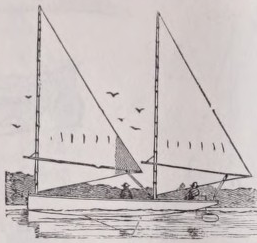
A long, sharp, flat-bottomed boat, with one or two masts carrying a triangular sail. They are often called Fair Haven sharpies, after the place on the coast of Connecticut where they originated.
Sharping[Present participle and verbal noun]Webster's Dictionary 1913
Adv. violently, amain, by storm, by force, by main force, with might and main, tooth and nail, vi et armis, at the point of the sword, at the point of the bayonet, at one fell swoop, with a high hand, through thick and thin, in desperation, with a vengeance, a outrance, a toute outrance, headlong, head foremost
Phr. furor arma ministrat, "blown with restless violence round about the pendent world"
V.creak, grate, jar, burr, pipe, twang, jangle, clank, clink, scream, yelp, buzz, set the teeth on edge, corcher les oreilles, pierce the ears, split the ears, split the head, offend the ear, grate upon the ear, jar upon the ear
V. be -intelligent, have all one's wits about one, understand, catch an idea, take in an idea, take a joke, take a hint, see through, see at a glance, see with half an eye, see far into, see through a millstone, penetrate, discern, foresee, discriminate, know what's what, listen to reason
Phr. aut regem aut fatuum nasci oportet, "but with the morning cool reflection came", flosculi sententiarum, les affaires font les hommes, mas vale saber que haber, mas vale ser necio que profiadol nemo solus sapit, nosce te, γνῶθι σεαυτόν, nullum magnum ingenium sine mixtura dementiae fuit, sapere aude, victrix fortunae sapientia
V. be active, busy oneself in, stir, stir about, stir one's stumps, bestir oneself, rouse oneself, speed, hasten, peg away, lay about one, bustle, fuss, raise up, kick up a dust, push, make a push, make a fuss, make a stir, go ahead, push forward, fight one's way, elbow one's way, make progress, toll, plod, persist, keep up the ball, keep the pot boiling, look sharp, have all one's eyes about one, rise, arouse oneself, hustle, get up early, be about, keep moving, steal a march, kill two birds with one stone, seize the opportunity lose no time, not lose a moment, make the most of one's time, not suffer the grass to grow under one's feet, improve the shining hour, make short work of, dash off, make haste, do one's best take pains, do wonders, work wonders, have many irons in the fire, have one's hands full, have much on one's hands, have other things to do, have other fish to fry, be busy, not have a moment to spare, not have a moment that one can call one's own, have one's fling, run the round of, go all lengths, stick at nothing, run riot, outdo, overdo, overact, overlay, overshoot the mark, make a toil of a pleasure, have a hand in, take an active part, put in one's oar, have a finger in the pie, mix oneself up with, trouble, one's head about, intrigue, agitate, tamper with, meddle, moil, intermeddle, interfere, interpose, obtrude, poke one's nose in, thrust one's nose in
Adv. actively, with life and spirit, with might and main, with haste, with wings, full tilt, in mediis rebus
Int. be alive, look alive, look sharp, move on, push on, keep moving, go ahead, stir your stumps, age quod agis, jaldi, karo, step lively, phr, carpe diem, nulla dies sine linea, nec mora nec requies, the plot thickens, no sooner said than done, "veni vidi vici", catch a weasel asleep, abends wird der faule fleissig, dictum ac factum, schwere arbeit in der jugend ist sanfte ruhe im alter, "the busy hum of men"
V. be skillful, excel in, be master of, have a turn for, know what's what, know a hawk from a handsaw, know what one is about, know on which side one's bread is buttered, know what's o'clock, have cut one's eye teeth, have cut one's wisdom teeth, see one's way, see where the wind lies, see which way the wind blows, have all one's wits about one, have one's hand in, savoir vivre, scire quid valeant humeri quid ferre recusent, look after the main chance, cut one's coat according to one's cloth, live by one's wits, exercise one's discretion, feather the oar, sail near the wind, stoop to conquer, play one's cards well, play one's best card, hit the right nail on the head, put the saddle on the right horse, take advantage of, make the most of, profit by &e, (use) 677, make a hit, make a virtue of necessity, make hay while the sun shines
Adj. skillful, dexterous, adroit, expert, apt, handy, quick, deft, ready, gain, slick, smart, proficient, good at, up to, at home in, master of, a good hand at, au fait, thoroughbred, masterly, crack, accomplished, conversant, experienced, practiced, skilled, hackneyed, up in, well up in, in practice, in proper cue, competent, efficient, qualified, capable, fitted, fit for, up to the mark, trained, initiated, prepared, primed, finished, clever, cute, able, ingenious, felicitous, gifted, talented, endowed, inventive, shrewd, sharp, on the ball, cunning, alive to, up to snuff, not to be caught with chaff, discreet, neat-handed, fine-fingered, nimble-fingered, ambidextrous, sure- footed, cut out for, fitted for, technical, artistic, scientific, daedalian, shipshape, workman- like, business-like, statesman-like
Adv.skillfully, well, artistically, with skill, with consummate skill, secundum artem, suo marte, to the best of one's abilities
Phr. ars celare artem, artes honorabit, celui qui veut celui-la peut, c'est une grande habilite que de savoir cacher sonhabilite, expertus metuit, es bildet ein talent sich in der stille sich ein charakter in dem strom der welt, "heart to conceive the understanding to direct, or the hand to execute", if you have lemons, make lemonade
V. be cunning, have cut one's eyeteeth, contrive, live by one's wits, maneuver, intrigue, gerrymander, finesse, double, temporize, stoop to conquer, reculer pour mieux sauter, circumvent, steal a march upon, overreach, throw off one's guard, surprise, snatch a verdict, waylay, undermine, introduce the thin end of the wedge, play a deep game, play tricks with, ambiguas in vulgum spargere voces, flatter, make things pleasant, have an ax to grind, dodge, sidestep, bob and weave
Adv. heart and soul, from the bottom of one's heart, ab imo pectore, at heart, con amore, heartily, devoutly, over head and ears, head over heels
Phr. the heart big, the heart full, the heart swelling, the heart beating, the heart pulsating, the heart throbbing, the heart thumping, the heart beating high, the heart melting, the heart overflowing, the heart bursting, the heart breaking, the heart goes out, a heart as big as all outdoors (sympathy) 897
V. cause pain, occasion pain, give pain, bring pain, induce pain, produce pain, create pain, inflict pain, pain, hurt, wound, pinch, prick, gripe, pierce, lancinate, cut, hurt the feelings, wound the feelings, grate upon the feelings, grate upon the nerves, jar upon the feelings, wring the heart, pierce the heart, lacerate the heart, break the heart, rend the heart, make the heart bleed, tear the heart strings, rend the heart strings, draw tears from the eyes, sadden, make unhappy, plunge into sorrow, grieve, fash, afflict, distress, cut up, cut to the heart, displease, annoy, incommode, discompose, trouble, disquiet, faze, feaze, feeze (u .s.), disturb, cross, perplex, molest, tease, tire, irk, vex, mortify, wherret|, worry, plague, bother, pester, bore, pother, harass, harry, badger, heckle, bait, beset, infest, persecute, importune, wring, harrow, torment, torture, bullyrag, put to the rack, put to the question, break on the wheel, rack, scarify, cruciate, crucify, convulse, agonize, barb the dart, plant a dagger in the breast, plant a thorn in one's side, irritate, provoke, sting, nettle, try the patience, pique, fret, rile, tweak the nose, chafe, gall, sting to the quick, wound to the quick, cut to the quick, aggrieve, affront, enchafe, enrage, ruffle, sour the temper, give offense, maltreat, bite, snap at, assail, smite, sicken, disgust, revolt, nauseate, disenchant, repel, offend, shock, stink in the nostrils, go against the stomach, turn the stomach, make one sick, set the teeth on edge, go against the grain, grate on the ear, stick in one's throat, stick in one's gizzard, rankle, gnaw, corrode, horrify, appal, appall, freeze the blood, make the flesh creep, make the hair stand on end, make the blood curdle, make the blood run cold, make one shudder, haunt the memory, weigh on the heart, prey on the heart, weigh on the mind, prey on the mind, weigh on the spirits, prey on the spirits, bring one's gray hairs with sorrow to the grave, add a nail to one's coffin
Int. hinc illae lachrymae, phr, surgit amari aliquid, the place being too hot to hold one, the iron entering into the soul, "he jests at scars that never felt a wound", "i must be cruel only to be kind", "what deep wounds ever closed without a scar?"
V. be -rude, insult, treat with discourtesy, take a name in vain, make bold with, make free with, take a liberty, stare out of countenance, ogle, point at, put to the blush, cut, turn one's back upon, turn on one's heel, give the cold shoulder, keep at a distance, keep at arm's length, look cool upon, look coldly upon, look black upon, show the door to, send away with a flea in the ear, lose one's temper, sulk a, frown, scowl, glower, pout, snap, snarl, growl, render rude &c. ad, brutalize, brutify
Unto the woman he said, I will greatly multiply thy sorrow and thy conception; in sorrow thou shalt bring forth children; and thy desire shall be to thy husband, and he shall rule over thee.
To the woman He said: “I will sharply increase your pain in childbirth; in pain you will bring forth children. Your desire will be for your husband, and he will rule over you.”
And the men of Ephraim said unto him, Why hast thou served us thus, that thou calledst us not, when thou wentest to fight with the Midianites? And they did chide with him sharply.
Then the men of Ephraim said to Gideon, “Why have you done this to us? Why did you fail to call us when you went to fight against Midian?” And they contended with him violently.
And between the passages, by which Jonathan sought to go over unto the Philistines’ garrison, there was a sharp rock on the one side and a sharp rock on the other side: and the name of the one was Bozez, and the name of the other Seneh.
Now there were cliffs on both sides of the pass that Jonathan intended to cross to reach the Philistine outpost. One was named Bozez and the other Seneh.
My soul is among lions: and I lie even among them that are set on fire, even the sons of men, whose teeth are spears and arrows, and their tongue a sharp sword.
My soul is among the lions; I lie down with ravenous beasts— with men whose teeth are spears and arrows, whose tongues are sharp swords.
This site uses cookies to remember your display preferences (search sources and editions, Bible version, auto-link, images, light/dark theme). No personal data whatsoever is collected. Privacy Policy